Why Driveways and Pathways Start Looking Older Than They Really Are
Why Driveways and Pathways Start Looking Older Than They Really Are
Have you ever walked into a property and immediately thought it looked older than expected?
Often, that first impression has very little to do with the building itself. Instead, your eyes are drawn to the driveway, pathways, and other outdoor surfaces that frame the entrance. If those areas look dark, stained, or weathered, the entire property can appear older, even if the building is relatively new.
This happens more often than people realise. Many homeowners, strata managers, and property owners assume that outdoor concrete, pavers, or stone naturally deteriorate quickly over time. While every material ages eventually, what most people are actually seeing is years of accumulated dirt, organic growth, pollution, and environmental buildup rather than permanent damage.
The encouraging news is that many of these surfaces are not worn out. They are simply hidden beneath layers of grime that have developed so gradually they become almost invisible to the people who see them every day.
Understanding why driveways and pathways change their appearance over time is the first step towards protecting both the presentation and longevity of your property.
👀 The Change Happens So Slowly That Most People Never Notice
One of the biggest reasons outdoor surfaces appear older than they really are is because the transformation happens gradually.
Unlike a broken fence or a cracked window, dirt doesn't appear overnight. A small amount of dust settles after a windy day. Rain carries fine particles across concrete. Fallen leaves leave behind natural tannins. Tiny patches of algae begin growing in shaded corners where moisture lingers just a little longer than usual.
Each individual change is almost impossible to notice.
Over weeks, months, and eventually years, those small layers build upon one another until the original colour and texture of the surface are no longer visible. Because the changes happen so slowly, people who visit the property every day rarely notice how different it has become.
Visitors, however, notice immediately.
Fresh eyes compare what they see with their expectations, and a darkened driveway or stained pathway instantly communicates the impression of age and neglect, even when the surface underneath remains structurally sound.
🌧️ Weather Constantly Leaves Its Mark
Outdoor surfaces spend every day exposed to conditions that indoor spaces never experience.
Rainwater washes dirt, pollen, leaves, and airborne particles across pathways and driveways. During warmer months, moisture combines with sunlight to encourage algae, mould, and mildew to grow. In autumn, decomposing leaves release organic matter that stains concrete and pavers. Even wind contributes by carrying dust, soil, and tiny debris that gradually settle into textured surfaces.
These natural processes occur throughout every season.
Properties surrounded by gardens or mature trees often experience even greater environmental buildup because organic material is constantly falling onto nearby hard surfaces. Tree sap, berries, flowers, and leaves all contribute to gradual discolouration.
None of these elements necessarily damage the surface itself, but together they slowly disguise its original appearance until it begins looking much older than it actually is.
🌿 Organic Growth Does More Than Change the Colour
Many people think algae and mould are simply cosmetic problems.
In reality, they affect both appearance and safety.
When algae begin developing across shaded pathways or damp driveways, they create dark green or black patches that make concrete appear aged and poorly maintained. Moss grows between pavers, while mould spreads unevenly across textured surfaces, creating a patchy appearance that immediately catches the eye.
Besides making surfaces look neglected, organic growth also retains moisture for longer periods. This creates slippery conditions that increase the risk of slips and falls, particularly during rainy weather.
Because these organisms continue growing unless removed, the appearance of the surface gradually becomes worse over time.
What initially looked like a few harmless green patches can eventually transform an otherwise attractive entrance into one that appears tired and uncared for.
🚶 Everyday Use Leaves Invisible Layers Behind
Weather is only part of the story.
Every person walking across a pathway and every vehicle entering a driveway contributes small amounts of dirt, dust, and debris.
Tyres leave behind microscopic rubber particles. Shoes carry soil from gardens, parks, and nearby streets. Construction dust, pollution, and fine sand settle into porous materials. Even bicycles, prams, and delivery trolleys gradually contribute to the wear and appearance of outdoor surfaces.
Most of these particles are far too small to notice individually.
Over time, however, they fill tiny pores and textured finishes, causing concrete, stone, and pavers to lose their original brightness. This gradual darkening is often mistaken for ageing, when it is actually the result of years of everyday use.
Regular sweeping helps remove loose debris, but it cannot remove deeply embedded dirt that has become trapped beneath the surface.
🏢 Pollution Also Accelerates Visual Ageing
Properties located near busy roads, commercial areas, or construction sites often experience another hidden contributor to surface discolouration.
Air pollution.
Vehicle exhaust, industrial particles, and airborne contaminants settle on outdoor surfaces every day. These particles mix with moisture, dust, and organic material to create stubborn stains that slowly darken concrete and paved areas.
Unlike loose dirt, pollution often bonds tightly with the surface, making ordinary cleaning methods far less effective.
Over several years, this accumulation creates the impression that the concrete itself has changed colour permanently.
In many cases, it has not.
The original material is still there, hidden beneath contaminants that have built up one layer at a time.
💦 Restoration Is Often Easier Than Replacement
One of the biggest misconceptions surrounding outdoor surfaces is that once they begin looking old, replacement is the only solution.
Fortunately, this is rarely true.
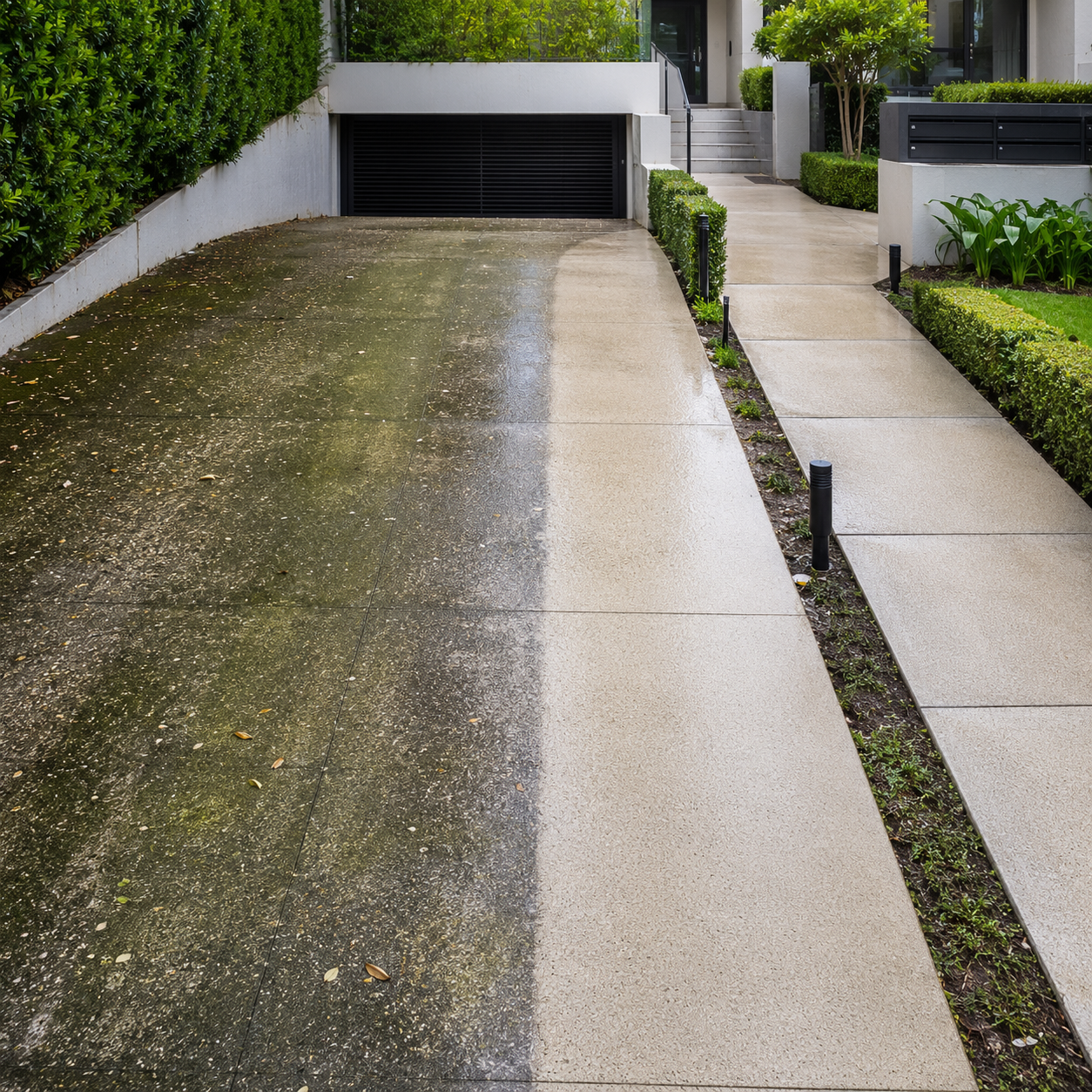
Professional pressure cleaning is designed to remove years of accumulated dirt, algae, mould, organic stains, and environmental buildup without replacing the surface itself. When carried out correctly using appropriate equipment and techniques, it can dramatically restore the original appearance of concrete, pavers, and other hard surfaces.
Many property owners are surprised by the transformation.
Areas that looked permanently stained often reveal colours and textures that had been hidden for years beneath accumulated grime. Instead of investing in expensive resurfacing projects, restoring the existing surface may provide outstanding results while extending its lifespan.
Preventative maintenance also makes future cleaning much easier. Removing buildup before it becomes deeply embedded helps preserve the appearance of outdoor areas and reduces the effort required to keep them looking their best.
✨ A Clean Entrance Changes the Way People See the Entire Property
First impressions are formed within seconds.
Before visitors notice landscaping, windows, or architectural features, they usually walk across the driveway or pathways leading to the entrance. Those surfaces create an immediate expectation about how well the property has been maintained overall.
Bright, clean pathways communicate care, professionalism, and attention to detail. Dark, stained surfaces create the opposite impression, even when the building itself is in excellent condition.
This is especially important for strata properties, commercial buildings, and residential communities where shared outdoor spaces influence the daily experience of residents, visitors, and potential buyers.
Keeping these high-traffic areas clean is not simply about aesthetics. It helps reinforce confidence that the entire property is being looked after consistently.
Sometimes, improving the appearance of a property does not require major renovations. It simply requires revealing the quality that has been hidden beneath years of environmental buildup.
🏡 Final Thoughts
Driveways and pathways rarely begin looking old because the materials themselves have reached the end of their life.
More often, they appear aged because years of dirt, mould, algae, pollution, stains, and organic residue have gradually covered their original surface. Since these changes happen slowly, they often go unnoticed until the entire entrance looks darker, duller, and less inviting than it once did.
The good news is that appearance and condition are not always the same thing. Many outdoor surfaces that seem worn out can be significantly improved through proper maintenance and professional pressure cleaning, restoring much of their original colour and character.
Looking after driveways and pathways is about more than keeping them clean. It is about protecting the first impression of your property, improving safety, and extending the life of surfaces that people use every single day.
If your outdoor surfaces are starting to look older than they really are, it may not be time for replacement. It may simply be time to uncover what has been there all along.
👉 Want to restore the appearance of your driveways and pathways? Click here to get your free quote and discover how professional pressure cleaning can help your property look cleaner, brighter, and better maintained year-round.