🌱 Why Does My Lawn Have Brown Patches Even When I Water It?
“Brown grass is a symptom, not a diagnosis. The real solution begins with understanding the pattern.”
You water the lawn, wait a few days, and expect the colour to improve.
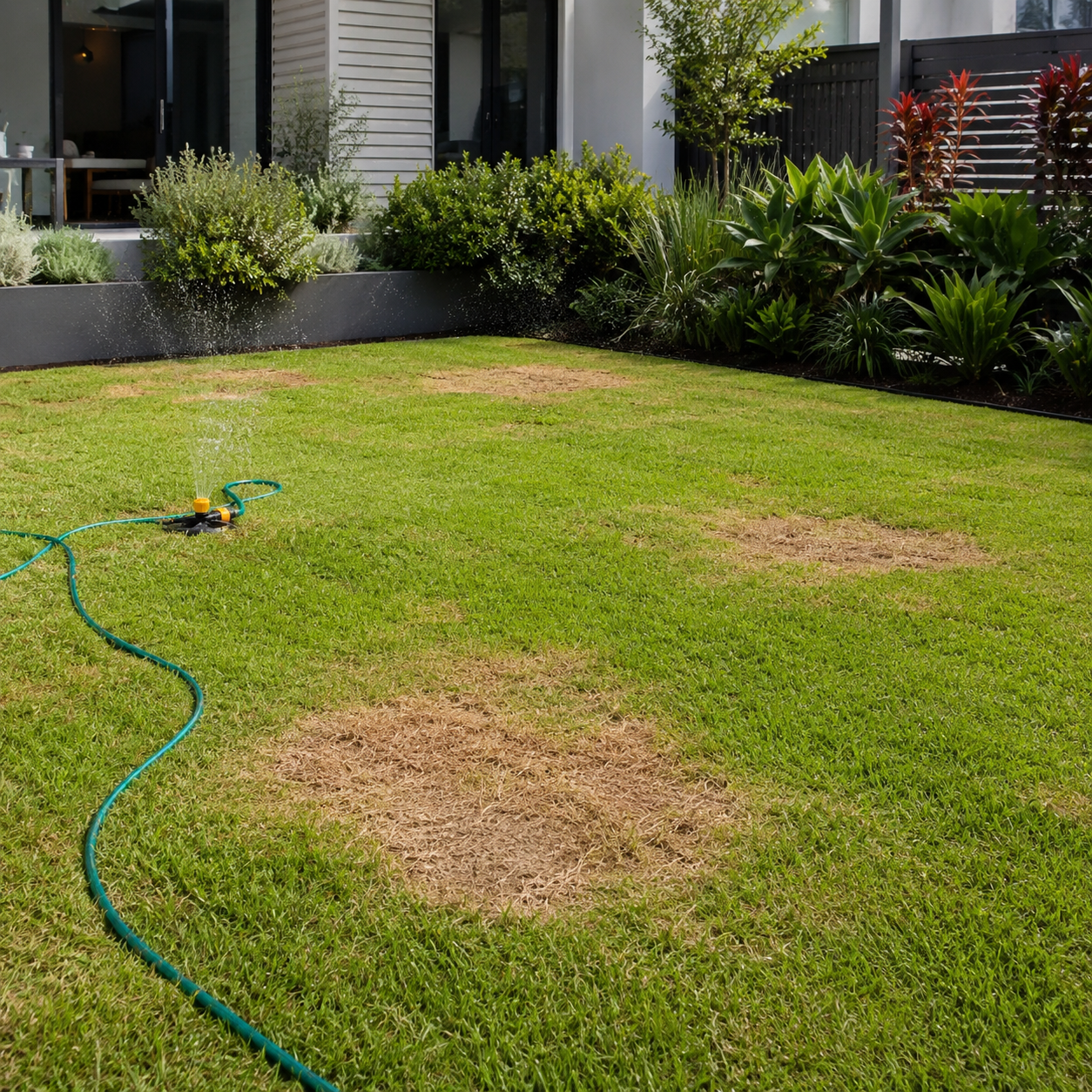
Instead, the same brown patches remain. Some areas may even become larger, while the surrounding grass stays green. The natural reaction is to water more, add fertiliser, or assume the lawn has dried out. Sometimes that helps, but in many cases, water was never the real problem.
🌱 Why Does My Lawn Have Brown Patches Even When I Water It?
Brown patches can develop for several completely different reasons. Too much moisture can damage grass just as easily as too little. Compacted soil may prevent water from reaching the roots, while blunt mower blades can leave the lawn looking dry and unhealthy. Pets, shade, fungal activity, poor drainage, and uneven irrigation can also create similar-looking symptoms.
The challenge is that different lawn problems often look almost identical from a distance. Treating every brown patch with more water may hide the cause temporarily or make the damage worse. Before choosing a solution, it helps to look closely at where the discolouration appears, how the soil feels, and what has recently changed around the property.
💧 More Water Is Not Always the Solution
When grass begins turning brown, most people assume it must be thirsty. This makes sense because dry lawns lose colour, become brittle, and may stop growing. However, adding more water without checking the soil can create a second problem, especially when the ground is already retaining more moisture than the roots can handle.
Overwatered lawns may develop shallow root systems because the grass no longer needs to search deeply for moisture. These shallow roots become more vulnerable to heat, foot traffic, and sudden changes in weather. Constantly damp soil can also reduce the oxygen available around the roots, making it harder for the grass to absorb nutrients and remain healthy.
The surface of the lawn may appear dry while the deeper soil remains wet. This is common in compacted areas or lawns with heavy soil, where water penetrates slowly and remains trapped below the surface. Adding more water in response can leave the root zone saturated even though the top layer looks deceptively dry.
Before watering again, press a finger or garden tool into the soil beneath the affected area. If the ground feels cool and moist several centimetres below the surface, a lack of water may not be the cause. Brown grass growing above consistently wet soil often points toward drainage, root stress, or disease rather than simple dehydration.
🌧️ Poor Drainage Can Slowly Damage the Roots
Some lawns receive the right amount of water but cannot move that water away effectively.
Low points in the ground, compacted soil, blocked drainage, heavy clay, and runoff from surrounding hard surfaces can all cause moisture to collect in specific sections. These areas may remain wet long after the rest of the lawn has dried, particularly following heavy rain or repeated irrigation.
Grass roots need both water and oxygen. When the soil remains saturated, air spaces fill with water and the roots begin struggling. The grass above may turn yellow, pale green, or brown, even though the affected area has more than enough moisture. In severe cases, the roots can weaken enough for the grass to lift easily from the soil.
Drainage-related patches often appear in the same places after every period of rain. You may also notice soft ground, muddy footprints, a musty smell, or water pooling nearby. These clues are important because they distinguish drainage stress from areas that are genuinely too dry.
Improving the situation may involve aerating compacted ground, correcting uneven levels, reducing unnecessary irrigation, or investigating where nearby water is coming from. Repeatedly replacing the damaged grass without correcting the movement of water will usually lead to the same brown patches returning.
🪨 Compacted Soil Prevents Water From Reaching the Right Places
A lawn can be watered regularly and still fail to absorb moisture evenly.
Soil becomes compacted when it is repeatedly pressed by people, pets, vehicles, garden equipment, or heavy rainfall. The particles are pushed closer together, reducing the small spaces that normally allow water, oxygen, and nutrients to travel toward the roots.
Instead of soaking into the ground, water may run across the surface and collect elsewhere. The lawn appears to have been thoroughly watered, but the roots beneath the compacted section receive very little. This can create dry brown patches beside greener areas, even when the entire lawn is covered by the same sprinkler.
Compaction is especially common along shortcuts, near gates, beside pathways, around clotheslines, and in sections used for outdoor activities. The affected grass may feel thin, grow slowly, and become difficult to push a garden fork into. Water may form small puddles or flow away before it has time to penetrate.
Aeration can help reopen the soil and improve the movement of moisture and air. However, the pressure causing the compaction should also be considered. Redirecting repeated foot traffic or protecting vulnerable sections may be necessary to prevent the ground from quickly becoming compressed again.
☀️ Uneven Sunlight Creates Different Growing Conditions
A lawn rarely receives identical sunlight across every section.
One area may receive direct sun throughout the day, while another is shaded by trees, fences, balconies, or nearby buildings. These differences affect how quickly the soil dries, how strongly the grass grows, and how much water each section needs.
Sunny areas often lose moisture faster and may turn brown during hot or windy weather. Shaded sections usually dry more slowly, but they can struggle for a different reason. Grass needs adequate light to produce energy, and some varieties become thin or weak when grown in deep shade. Those areas may remain damp while still appearing brown or sparse.
Problems often develop when the entire lawn is watered and mowed in exactly the same way. The sunny section may need deeper watering, while the shaded section may already be receiving too much. A mowing height that works in open areas may also place additional stress on grass growing beneath trees or beside buildings.
Observing the movement of sunlight across the property can reveal why patches repeatedly develop in the same places. The solution may involve adjusting irrigation, increasing mowing height in shaded areas, pruning vegetation where appropriate, or choosing a grass variety better suited to lower light conditions.
✂️ Your Mowing Habits May Be Stressing the Lawn
Mowing is intended to keep grass neat, but the wrong approach can contribute to brown or uneven patches.
Cutting the lawn too short removes a large portion of the leaf that the plant uses to produce energy. It also exposes the soil to more sunlight, allowing moisture to evaporate faster. During warm weather or periods of slow growth, repeatedly scalping the lawn can leave it weak and unable to recover between cuts.
Blunt mower blades create another problem. Instead of slicing the grass cleanly, they tear and crush the leaf tips. The damaged edges dry out and turn pale or brown, sometimes giving the entire lawn a dull appearance shortly after mowing. Torn grass is also more vulnerable to stress and certain diseases.
Uneven ground can cause the mower to cut some sections much shorter than others. Raised areas, edges, and small mounds may become scalped while lower sections remain green. This creates isolated brown patches that are easily mistaken for watering problems.
Checking blade sharpness, avoiding overly short cuts, and removing only a reasonable portion of the grass height at each service can reduce unnecessary stress. Mowing frequency should follow the growth rate of the lawn rather than a rigid schedule that ignores seasonal conditions.
🐕 Pets Can Create Distinctive Brown Patches
When brown spots appear suddenly in otherwise healthy grass, pets may be part of the explanation.
Dog urine contains concentrated nitrogen and salts. In small or diluted amounts, nitrogen can encourage greener growth. When repeatedly deposited in one place, however, the concentration may burn the grass and create a brown centre surrounded by a darker green ring.
These patches are often round or irregular and may appear in the same preferred areas of the yard. Watering the entire lawn more frequently may not prevent them because the issue is localised and occurs immediately where the urine contacts the grass.
Diluting the affected spot with water soon after use may reduce the concentration reaching the soil. Creating a designated pet area with a more suitable surface can also protect the main lawn, particularly in properties where the same section is used several times each day.
Not every circular patch is caused by a pet, so the surrounding clues still matter. If the grass has a green outer ring, appears in repeated locations, and develops quickly, pet activity becomes more likely. If the patches continue spreading independently, another cause such as fungal activity may need to be considered.
🍄 Fungal Problems Can Look Like Drought Stress
Lawn diseases are often mistaken for a lack of water because both can create brown, yellow, or thinning areas.
Fungal activity is more likely when moisture remains on the grass for extended periods, especially during humid weather or when lawns are watered late in the day. Dense thatch, poor airflow, excessive fertiliser, and overwatering can create conditions where disease spreads more easily.
Different lawn diseases produce different patterns. Some create small circular patches that gradually expand, while others cause individual blades to develop spots, discolouration, or damaged roots. The affected grass may feel damp rather than dry, and the patches can continue growing even when watering is increased.
Adding more water to a fungal problem may make it worse by extending the amount of time the lawn remains wet. This is why it is important to inspect the grass closely rather than relying only on colour. Look at the blades near the edge of the patch, where active damage is often easier to identify.
Improving airflow, watering earlier, reducing excess moisture, and avoiding unnecessary fertiliser may help create less favourable conditions for disease. When the cause remains unclear or the damage spreads quickly, professional assessment is safer than repeatedly trying unrelated treatments.
🚿 Your Irrigation System May Not Be Covering the Lawn Evenly
An irrigation system can be operating every week without watering the entire lawn properly.
Sprinkler heads may become blocked, damaged, tilted, or partially hidden by growing grass. Wind can redirect fine spray, while changes in water pressure may reduce the distance it travels. One section receives enough water, another receives too much, and a third receives almost none.
This uneven coverage often produces repeated dry patches in predictable locations. Grass near a functioning sprinkler stays green, while areas at the edge of its reach gradually turn brown. Overlapping zones may remain excessively wet and develop separate problems related to poor drainage or fungal activity.
A simple inspection while the system is running can reveal blocked nozzles, incorrect angles, leaks, and sections where the water never lands. Placing several identical containers across the lawn for one watering cycle can also show whether each area receives a similar amount.
Irrigation should be adjusted as the garden changes. Plants grow, tree canopies expand, new structures create barriers, and sprinkler heads settle over time. A system that once provided even coverage may no longer suit the current layout of the property.
🌱 Lawn Recovery Starts With Identifying the Pattern
Brown grass is a symptom, not a complete diagnosis.
The location, shape, texture, and timing of the patches can provide valuable clues. Damage beside a busy pathway may suggest compaction. Brown areas in low ground may point toward drainage. Circular spots with green edges may be connected to pets, while spreading patches in damp conditions may indicate disease.
It is also useful to consider what happened before the damage appeared. Was the lawn recently mowed much shorter than usual? Did the area experience heavy rainfall, hot weather, landscaping work, increased traffic, or a change to the irrigation system? Small changes in routine can have a significant effect.
Trying multiple treatments at the same time makes the cause harder to identify. Adding water, fertiliser, soil products, and seed simultaneously may produce a temporary response, but it becomes impossible to know which action helped or whether one created a new problem.
A better approach is to observe first, correct the most likely cause, and monitor how the lawn responds. Recovery takes time because healthy colour depends on new growth, stronger roots, and improved soil conditions rather than a quick cosmetic change.
🏡 Final Thoughts
Brown patches do not always mean your lawn needs more water.
They can develop because the soil is too wet, too compacted, poorly drained, unevenly irrigated, or exposed to different levels of sunlight. Mowing damage, pet activity, fungal problems, and repeated foot traffic can also create similar-looking symptoms.
The most effective solution begins with understanding the pattern instead of reacting only to the colour. Checking the soil, observing drainage, inspecting the irrigation system, reviewing mowing habits, and looking closely at the damaged grass can reveal much more than simply increasing the watering time.
A healthy lawn depends on balance. It needs moisture, but it also needs oxygen, suitable light, strong roots, appropriate mowing, and soil that allows water to move properly. When one of those elements is missing, the grass may continue struggling no matter how often the sprinkler runs.
By identifying the real cause early, you can avoid wasting water, applying unnecessary treatments, and repeatedly repairing the same area. The objective is not only to turn the lawn green again, but to create conditions that help it remain stronger through changing weather and everyday use.
👉 Is your lawn developing brown patches that never seem to improve? Click here to get a free quote and discover how regular garden maintenance can help identify the cause and support a healthier, more consistent lawn.