🌿 Why Do Weeds Keep Coming Back After You Remove Them?
You pull them out, tidy the garden, step back, and finally feel like the job is done.
Then, a few days or weeks later, the same weeds begin appearing again. Some return in exactly the same place. Others seem to spread across areas that were clear only recently. It can feel frustrating, especially when you have already spent time removing everything you could see.
The problem is not always that you removed the weeds incorrectly. In many gardens, the visible plant is only one part of a much larger system happening beneath the soil. Roots, runners, seeds, moisture, sunlight, and empty garden space all influence whether weeds disappear or quickly return.
Understanding why weeds keep coming back is the difference between repeatedly treating the same symptom and finally addressing the conditions that allow the problem to continue.
🌿 Why Do Weeds Keep Coming Back After You Remove Them?
You pull them out, tidy the garden, step back, and finally feel like the job is done.
Then, a few days or weeks later, the same weeds begin appearing again. Some return in exactly the same place. Others seem to spread across areas that were clear only recently. It can feel frustrating, especially when you have already spent time removing everything you could see.
The problem is not always that you removed the weeds incorrectly. In many gardens, the visible plant is only one part of a much larger system happening beneath the soil. Roots, runners, seeds, moisture, sunlight, and empty garden space all influence whether weeds disappear or quickly return.
Understanding why weeds keep coming back is the difference between repeatedly treating the same symptom and finally addressing the conditions that allow the problem to continue.
👀 What You See Above the Soil Is Only Part of the Weed
When most people remove weeds, they focus on the leaves and stems growing above the ground. These are the most visible signs of the problem, but they are not always the most important. Beneath the surface, many weeds have developed strong root systems that store enough energy to produce new growth after the top of the plant has been removed.
If the stem snaps while the roots remain in the soil, the garden may look clear temporarily. However, the plant is often still alive underground. Once the right combination of moisture, warmth, and sunlight returns, those remaining roots can produce fresh shoots and restart the cycle.
Some species are particularly persistent because even a small piece of root left behind may be capable of growing again. This is why weeds can return from the same spot even when the original plant appeared to have been removed completely.
Pulling slowly from the base of the plant while the soil is slightly damp can make complete removal easier. Dry, compacted soil tends to hold roots firmly, causing stems to break before the entire root system is released.
The goal is not simply to make the garden look weed-free today. It is to remove as much of the plant’s ability to regenerate as possible.
🌱 Dormant Seeds May Already Be Waiting in the Soil
Even when every visible weed and root has been removed, the soil may still contain thousands of seeds.
This collection of seeds is often referred to as a seed bank. Some may have been dropped recently, while others may have remained inactive underground for months or even years. They do not all germinate at once because they are waiting for the right environmental conditions.
When soil is disturbed through digging, planting, cultivation, or weed removal, buried seeds can be brought closer to the surface. Suddenly, they receive the sunlight, moisture, oxygen, and warmth required to begin growing. This creates the frustrating impression that removing one group of weeds somehow caused another group to appear.
In reality, those seeds were already present.
A single mature weed can produce a surprisingly large number of seeds, which means allowing even a few plants to flower can create future problems across the garden. By the time the flowers or seed heads are obvious, the next generation may already be developing.
Removing weeds before they flower and produce seed is one of the most effective long-term strategies. It may not eliminate the existing seed bank immediately, but it prevents the soil from being continually replenished with new seeds.
Over time, consistent removal before seeding can significantly reduce the number of weeds that return.
🌿 Underground Runners Allow Weeds to Spread Quietly
Not every weed depends on seeds.
Some spread through underground stems, runners, bulbs, tubers, or rhizomes. These structures allow the plant to travel beneath the soil and produce new growth in nearby areas. What appears to be several separate weeds may actually be one interconnected plant.
Removing only the visible shoots leaves the underground network untouched. The plant can then continue moving through garden beds, along borders, beneath mulch, and between paving edges. New shoots may appear a short distance away, making it seem as though weeds are spreading randomly.
Digging without understanding the root structure can sometimes make the situation worse. Cutting a runner or rhizome into several pieces may create multiple sections that are still capable of growing. Instead of removing one plant, the disturbance can unintentionally distribute it through a larger area.
Persistent spreading weeds often require careful, repeated removal rather than one aggressive clean-up. The soil may need to be loosened gently so the underground structure can be lifted with minimal breakage.
Regular monitoring is also essential. New shoots should be removed while they are still small, before they have enough time to rebuild the plant’s energy reserves and strengthen the underground network.
☀️ Empty Soil Creates an Invitation for New Weeds
A freshly cleared garden bed may look neat, but exposed soil rarely stays empty for long.
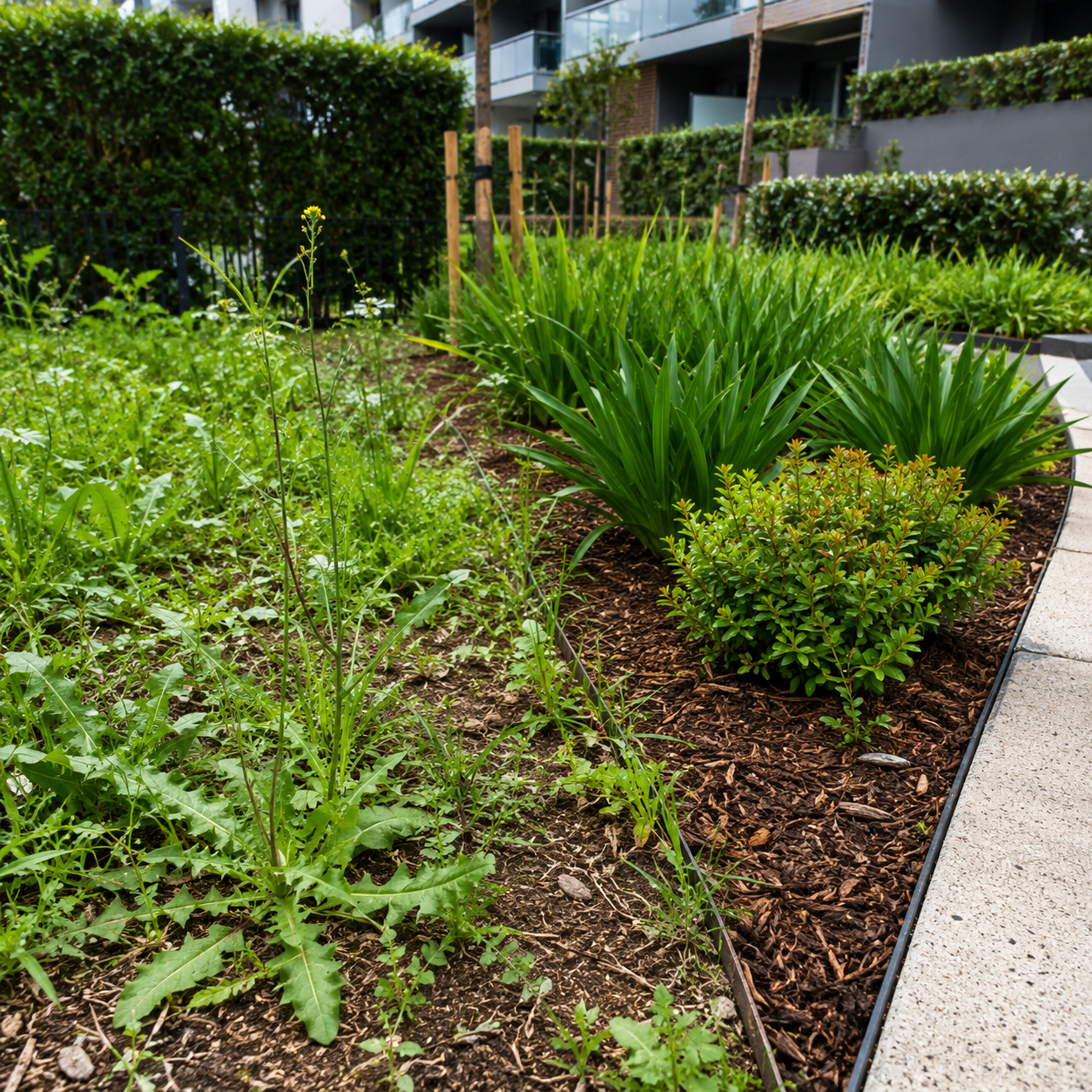
Bare ground provides sunlight, moisture, and open space with very little competition. These are ideal conditions for weed seeds to germinate. When established plants are removed without replacing the coverage they provided, the garden creates an opportunity for the fastest-growing species to take over.
Weeds are successful partly because they are designed to respond quickly to disturbed environments. They grow rapidly, spread efficiently, and tolerate conditions that may be difficult for more decorative plants. A garden bed with large gaps gives them exactly what they need.
Ground-cover plants, appropriate mulching, and well-planned planting can reduce the amount of exposed soil available. The objective is not to create a completely sealed surface, but to make it more difficult for weeds to access the light and space required for strong growth.
Healthy ornamental plants also create competition for water and nutrients. When garden beds are densely but appropriately planted, weeds have fewer opportunities to establish themselves.
This is why weed prevention cannot be separated from garden design. Removing unwanted plants is only one step. Deciding what will occupy the space afterwards is equally important.
🍂 Mulch Helps, but It Is Not a Permanent Barrier
Mulch is one of the most useful tools for reducing weed growth, but it is often misunderstood.
A suitable layer of mulch helps block sunlight from reaching seeds near the soil surface. It can also regulate soil temperature, reduce moisture loss, protect roots, and improve the overall appearance of garden beds. These benefits create healthier growing conditions for the plants you want while making germination more difficult for many weeds.
However, mulch does not permanently eliminate the problem.
If the layer is too thin, seeds can still receive enough light to grow. Over time, organic mulch also breaks down and becomes part of the soil. Wind, birds, foot traffic, rain, and garden maintenance can move it away from certain areas, leaving exposed patches.
New seeds may also land on top of the mulch rather than underneath it. If fine soil and organic debris accumulate across the surface, those seeds may germinate without ever reaching the original garden soil.
Mulch works best as part of a maintenance system. It needs to be checked, redistributed, and replenished when necessary. Existing weeds should also be removed before fresh mulch is added, especially if they are already well established.
Used correctly, mulch reduces the frequency and intensity of weeding. It should support consistent maintenance rather than replace it completely.
💧 Watering Habits Can Encourage Weeds Without You Realising
Every plant needs water, including the plants you do not want.
Broad watering methods that wet the entire garden bed can encourage seeds to germinate in empty spaces between established plants. Frequent, shallow watering is particularly helpful to young weeds because their early roots remain close to the surface.
The garden may be receiving enough water to keep the top layer of soil constantly moist, but not enough to encourage the deeper root growth that established plants need. Weeds often take advantage of these surface conditions and grow faster than the surrounding garden.
More targeted watering can help reduce unnecessary moisture in open areas. Drip irrigation and carefully positioned watering systems deliver water closer to the root zones of selected plants rather than across every section of soil.
The timing of watering also matters. Excessive irrigation, leaking systems, poor drainage, and constantly damp areas can create ideal conditions for certain weed species. These problems may continue regardless of how often the visible growth is removed.
Before assuming that weeds are simply unavoidable, it is worth observing where they appear most frequently. Repeated growth in the same damp areas may be a sign that irrigation or drainage needs attention.
Sometimes the best weed-control strategy begins with changing how the garden is watered.
🪴 Weak Gardens Give Weeds Less Competition
Weeds often become more noticeable when the surrounding garden is struggling.
Thin lawns, stressed plants, compacted soil, nutrient imbalances, damaged ground cover, and poorly planned garden beds all create spaces that aggressive weeds can occupy. The issue is not always that the weeds are unusually strong. Sometimes the desired plants are simply too weak to compete with them.
A healthy lawn, for example, creates dense coverage that limits the light and space available to new weed seedlings. When grass becomes thin because of shade, poor soil, incorrect mowing, pests, or inconsistent watering, weeds gain access to the open ground.
The same principle applies to garden beds. Plants that are suitable for the local conditions are more likely to grow strongly and occupy their intended space. Plants that are constantly stressed leave gaps, require frequent replacement, and create repeated opportunities for weeds.
Improving soil structure, choosing suitable plants, correcting irrigation, and maintaining appropriate coverage can therefore reduce weed pressure naturally.
This approach takes more thought than simply removing unwanted growth, but it produces more stable results. A resilient garden does not eliminate every weed, but it makes it much harder for them to dominate.
📅 Why One Big Clean-Up Rarely Solves the Problem
Weeds are often treated as a once-a-season task.
The garden becomes noticeably overgrown, a large clean-up is arranged, and everything is removed at once. The result looks impressive, but the underlying cycle continues. Roots remain, seeds germinate, mulch shifts, and new growth appears before the next major visit.
Smaller and more consistent maintenance is usually more effective.
Young weeds are easier to remove because their root systems are less established. They are also less likely to have flowered or produced seed. Regular attention prevents a minor problem from becoming a garden-wide restoration project.
Consistency also makes it easier to understand patterns. When the garden is inspected regularly, it becomes possible to identify which areas produce the most weeds, which species return repeatedly, and which environmental conditions are supporting their growth.
This information helps create a more targeted plan. Instead of treating every weed in the same way, maintenance can focus on the actual causes behind each problem.
The most successful gardens are not necessarily those where weeds never appear. They are the gardens where new growth is noticed and managed before it has time to spread.
🏡 Final Thoughts
Weeds keep coming back because removing what is visible does not always remove what is causing the growth.
Roots may remain beneath the soil. Dormant seeds may be waiting for light and moisture. Underground runners may continue spreading through garden beds. Bare soil, weak plants, shallow watering, and thin mulch may all create conditions that allow the same problem to return.
Long-term weed control requires more than repeated pulling. It depends on interrupting the full growth cycle, reducing seed production, improving garden coverage, supporting healthy plants, and maintaining the area consistently.
The objective does not need to be a garden where no weed ever appears. That expectation is rarely realistic. A better goal is a healthy, well-managed garden where weeds are prevented from becoming established, spreading, and taking attention away from the plants and spaces you actually want to enjoy.
A garden that stays neat is not created through one perfect clean-up. It is created through small, informed actions repeated at the right time.
👉 Need help keeping your garden healthier, tidier, and easier to manage? Click here to request a free quote and discover how regular garden maintenance can prevent weeds from taking over your property.