🪟 Why Do My Windows Look Dirty Again So Soon After Cleaning?
Windows do not get dirty by accident. Something nearby is feeding them, and it will keep feeding them until it is found.
If your glass looks tired a week after cleaning, the problem is not the cleaning. It is what happens between cleans.
There are few household frustrations quite like it. You spend an afternoon cleaning the windows, or you pay someone to do it properly, and for a few glorious days the light pours in and the glass practically disappears. Then it rains once, or a week passes, and there they are again: spots, streaks and film, as if the clean never happened.
🪟 Why Do My Windows Look Dirty Again So Soon After Cleaning?
Here is the reframe that makes sense of it: windows are collectors. They stand vertically in the path of everything the environment throws sideways: dust, rain residue, salt, pollen, irrigation spray and traffic film. How fast your glass gets dirty is not random. It is decided by what surrounds the window, and every window has its own particular feeders.
The good news is that most fast dirtying windows have one or two identifiable causes, and several of them can be reduced or eliminated entirely. Let us walk through the usual suspects, how to identify yours, and the routine that keeps glass genuinely clear instead of briefly clean.
🌧️ Suspect 1: Rain Is Not Clean Water
The most common complaint, dirty windows right after rain, has a simple explanation: rain does not wash windows, it paints them. Raindrops collect dust and pollutants as they fall, and in Sydney they often carry fine dust that has travelled enormous distances. When each drop dries on glass, it leaves its cargo behind as a spot, and a shower of drops leaves the speckled film everyone blames on the cleaner.
There is a twist worth knowing: rain marks glass that is already slightly dusty far worse than clean, sealed glass, because the drops mix with the surface dust and smear it. This is why windows cleaned regularly seem to survive rain better than windows cleaned rarely. The rain is the messenger, not the cause: it simply reveals and redistributes whatever was already sitting on and around the glass.
🌊 Suspect 2: Salt, the Coastal Window's Constant Companion
If your property sits anywhere near the coast, salt spray is working on your glass every single day. Onshore winds carry microscopic salt particles surprising distances inland, and they settle on windows as a fine haze that attracts and holds moisture. The result is glass that looks permanently slightly foggy, develops spots faster after every wind change, and in the long term can suffer etching if the salt is never removed.
The identification is easy: coastal windows facing the ocean side dirty noticeably faster than the sheltered side, and the film returns evenly rather than in drips or splashes. The response is frequency plus rinsing: seaside glass benefits from more regular professional cleaning, and between cleans, an occasional gentle rinse with fresh water removes the salt load before it bonds and builds. Salt is relentless, but it is also the easiest contaminant to rinse away when addressed early.
💦 Suspect 3: Your Own Garden and Sprinklers
Some of the fastest window dirtying comes from inside the property line. Irrigation spray that clips a window leaves hard water spots with every cycle, and those mineral deposits bond to glass harder than almost any other residue. Garden beds against the wall splash soil onto low glass every time it rains. Trees over the roofline drip sap, pollen and organic residue onto the panes below.
Run this quick audit: look at which windows dirty fastest and what sits within two metres of them. A sprinkler head angled slightly toward the house, a dense shrub against the sill, a fig or gum overhead. Each has a simple fix: adjust the sprinkler arc, trim the vegetation back from the glass, and clean sap prone windows more often during the drop season. This is the most satisfying suspect to catch, because eliminating it produces a permanent improvement for zero ongoing cost.
🏙️ Suspect 4: Traffic Film and City Grime
Windows facing busy roads collect a film no home remedy quite explains. Vehicle exhaust, brake dust and airborne oils form a thin, slightly greasy layer on glass that ordinary water struggles to cut. It builds gradually and evenly, which is why road facing windows develop a dull, grey cast rather than visible spots, and why they streak badly when cleaned with just water or a quick wipe.
Apartment buildings on main roads know this film well: it is the reason street facing glass and balustrades never seem to stay bright. The treatment is proper cleaning chemistry rather than more effort: professional window cleaning cuts the oily layer instead of pushing it around, which is also why the results last longer. If your windows streak immediately after DIY cleaning but stay clear for weeks after a professional visit, traffic film is almost certainly your suspect.
🧼 Suspect 5: The Cleaning Itself Might Be the Problem
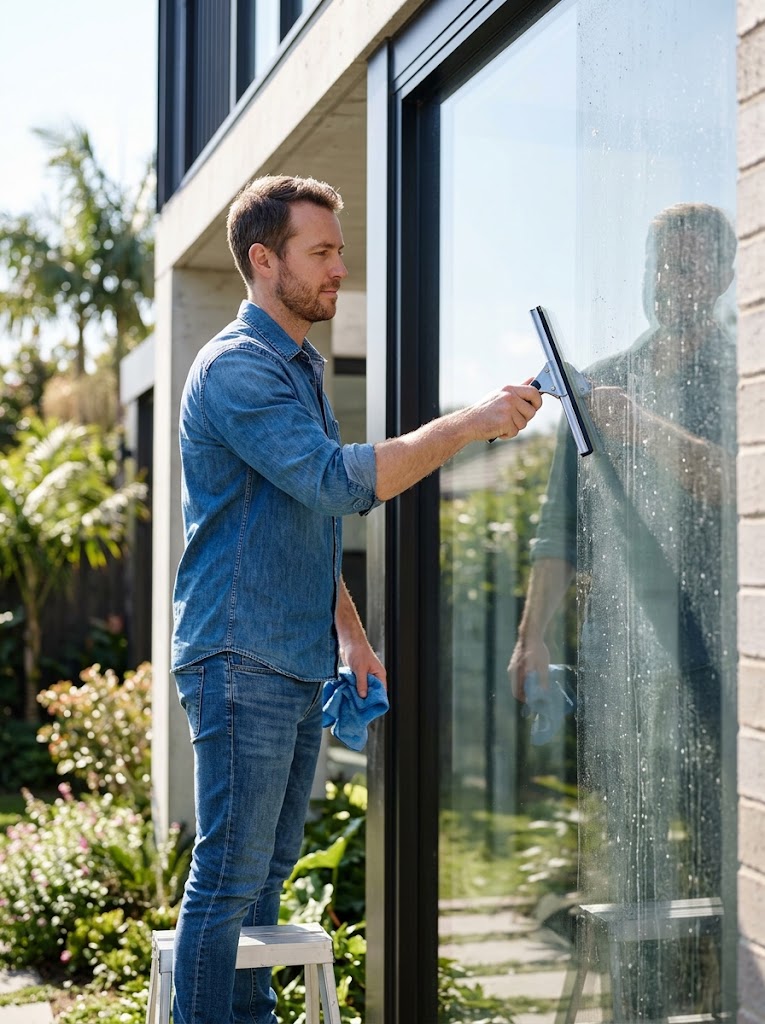
Sometimes the reason windows look dirty a week after cleaning is that the clean left the invitation behind. Washing windows in direct hot sun dries the cleaning solution before it can be removed, baking on streaks. Dirty cloths and squeegees redeposit grime in fine layers. Household glass sprays can leave a slight residue film that actually attracts dust, making the glass dirty faster than before it was cleaned.
The fix costs nothing: clean glass in shade or on overcast days, use clean tools and minimal product, and finish with a proper squeegee stroke rather than circular wiping. And do not forget the frames, sills and screens: dust sitting in a gritty sill or a dirty flyscreen washes straight onto the glass with the first rain, undoing the clean from the edges inward. A window is a system, and cleaning only its centre is a short lived victory.
🪟 The Overlooked Multiplier: Screens, Frames and Seals
Flyscreens deserve their own mention, because they are dust reservoirs sitting centimetres from the glass. A screen loaded with months of dust and pollen sheds onto the window every time wind or rain passes through it, and it casts the grey tint that makes glass look dirty even when it is technically clean. Washing or vacuuming screens once or twice a year visibly improves how long windows stay bright.
Frames and weep holes matter too: grime streaming from unwashed frames is a classic source of the dirty tears that appear down glass after rain. When booking or doing a window clean, make sure frames, tracks and screens are included, because glass only cleaned between dirty borders is surrounded by its next contamination. The windows that stay clean longest are the ones cleaned as complete units.
🔬 Hard Water Spots: The Stains That Outlive Every Clean
If some marks survive even a proper clean, you are probably looking at mineral deposits rather than dirt. Hard water spots form when water evaporates on glass and leaves its dissolved minerals behind, and every cycle adds a layer. Sprinkler overspray is the biggest source, but dripping air conditioners, leaking gutters above windows and even repeated rain runoff from a rendered wall can all deliver mineral rich water to the same patch of glass.
Catch them early and they wipe away with a vinegar based clean. Leave them for months and the minerals bond into the surface, needing specialised polishing to remove, and in severe cases the etching becomes permanent. The test: run a fingernail over a stubborn spot after cleaning. If you can feel it, it is mineral buildup, and it is time to both treat the glass and, more importantly, trace and stop the water source that keeps feeding it.
📌 A Realistic Window Routine for Sydney Properties
Here is a rhythm that keeps glass genuinely clear without becoming a hobby. For most homes: a proper full clean, glass, frames, tracks and screens, two to four times a year, with quick touch ups of the worst facing windows in between. Coastal properties: lean toward the more frequent end, with occasional fresh water rinses between cleans. Road facing apartments and commercial frontages: professional cleaning on a scheduled cycle, because traffic film defeats casual methods.
Add the once only fixes from your audit: redirect any sprinkler that touches glass, trim vegetation away from windows, and clean the screens as part of every window session. For strata buildings, high glass and full facades belong with professionals on a documented schedule, both for safety and because consistent results across an entire building are what residents and valuers actually notice.
🏡 Final Thoughts
So, why do your windows look dirty again so soon after cleaning? Because something is actively feeding them: dust carrying rain, coastal salt, your own sprinklers and garden, traffic film, or a cleaning routine that leaves residue and dirty borders behind. Identify your suspects, eliminate the ones you control, and match the cleaning frequency to what your environment actually throws at the glass.
Clean windows are not a moment, they are a maintenance rhythm. Get the rhythm right and the glass stays bright enough, for long enough, that you stop thinking about it at all, which is exactly what windows are supposed to do.
👉 Are your windows never quite clean no matter how often they get washed? Click here to get a free quote and discover how professional window cleaning, done as part of regular property maintenance, can keep your glass clear for months instead of days.