
🌿 When Is the Best Time to Trim Hedges in Sydney?
A hedge is a slow conversation between the plant and the person trimming it. Timing is how you keep the conversation friendly.
Trim at the right moment and the hedge thickens. Trim at the wrong one and you spend a season looking at the mistake.
Hedge trimming looks like the simplest job in the garden: cut it when it looks messy. And yet the same hedge, trimmed the same way, can respond completely differently depending on the month. Cut at the right time, it bounces back denser and greener within weeks. Cut at the wrong time, it sits there brown tipped and sulking, sometimes for an entire season, in full view of the street.
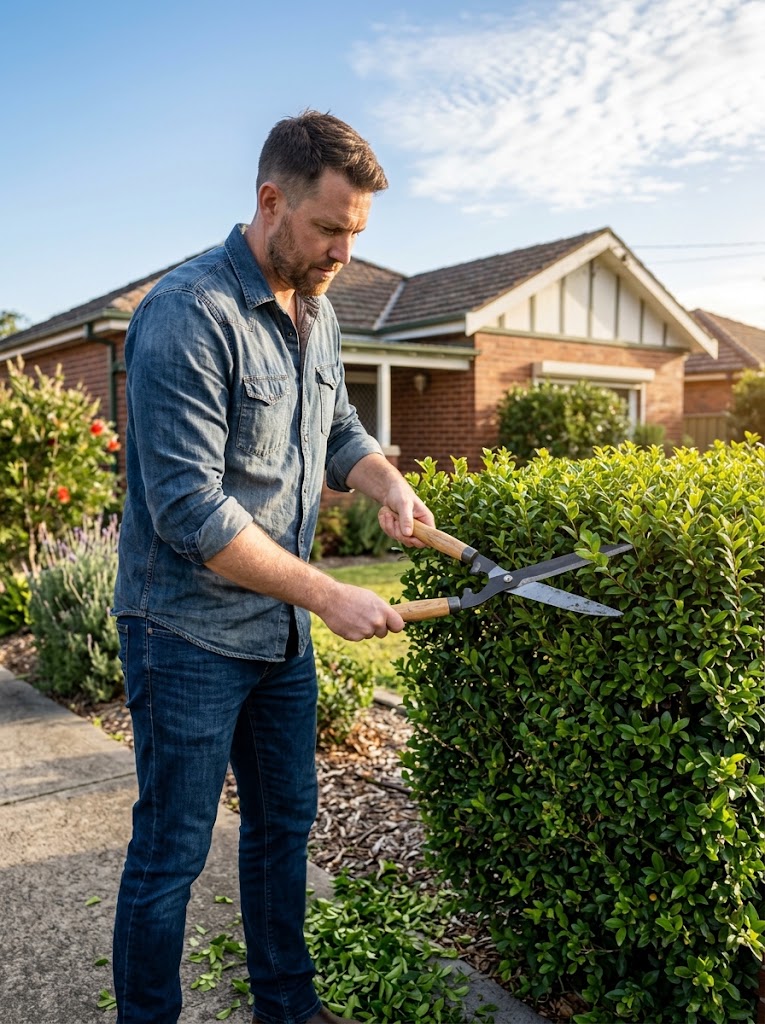
🌿 When Is the Best Time to Trim Hedges in Sydney?
The difference is not technique. It is biology. A hedge recovers from trimming by pushing out new growth, which means the best time to trim is always just before or during a period of active growth, and the worst time is right before conditions that punish fresh shoots: frost, heatwaves or dormancy.
So, when is the best time to trim hedges in Sydney? For most hedges, the sweet spots are early spring and again in late summer to early autumn, with light touch ups through the growing season. But the full answer depends on what your hedge is, and that is what this guide breaks down, month by month and hedge by hedge.
🌱 The Golden Rule: Trim Before Growth, Not Before Stress
A hedge heals by growing, so every trim should be timed to a moment when growth is coming. In Sydney's climate, that points straight at early spring, September into October, as the single best window of the year. The plant is waking up, the weather is mild, and every cut you make is answered within weeks by fresh, dense new foliage that closes the hedge's surface.
The same rule tells you when not to cut. Avoid hard trimming in the depths of winter, when the plant is too slow to respond and cuts sit exposed for months. Avoid it right before summer heatwaves, because a fresh trim strips the hedge's shade canopy and lets the sun scorch the newly exposed inner leaves. Think of it this way: never send new growth out into bad weather, and never wound a plant that is asleep.
☀️ The Sydney Hedge Calendar, Season by Season
If you want the whole year in one picture, here is the rhythm that suits most Sydney hedges. Early spring: the main structural trim of the year, shaping the hedge and encouraging the season's density. Late spring through summer: light maintenance trims every six to eight weeks to hold the shape, always avoiding the hottest weeks. Late summer to early autumn: the second significant trim, tidying the season's growth while there is still warmth for recovery.
Then comes the quiet stretch: from mid autumn through winter, most hedges should be left alone apart from removing dead or damaged material. A late hard cut in autumn produces tender growth just in time for cold nights to burn it. Winter trimming of frost sensitive species leaves marks that last until spring. The calendar is really two working seasons separated by two rest periods, and respecting the rests is half the skill.
🌳 Know Your Hedge, Because Species Changes the Answer
The calendar above fits most hedges, but the most common Sydney species each have their own preferences. Fast natives like lilly pilly, the most popular hedge in Sydney, grow almost year round and tolerate frequent light trims from spring to autumn, which is exactly what keeps them tight. Murraya, another Sydney favourite, responds best to a trim after each of its flowering flushes, so you keep both the shape and the perfume. Photinia loves a spring cut that triggers its famous red new growth.
Slower, formal hedges like buxus prefer two or three well timed trims a year rather than constant clipping, ideally in spring and late summer, avoiding hot sun immediately after. Conifers are the strictest of all: they must never be cut back into old, leafless wood, because most will not regrow from it, so little and often during the growing season is the only safe approach. Ten seconds of identifying what you have prevents the one mistake a hedge cannot recover from.
✂️ The Mistakes That Ruin Hedges (and How to Avoid Them)
Most hedge damage comes from three avoidable errors, and timing is behind two of them. The first is the too hard, too late cut: removing a large fraction of the hedge in autumn or winter, leaving a skeleton that has no growing season ahead to recover with. If a hedge needs serious size reduction, stage it across two or three trims during the growing months instead of one dramatic assault.
The second is trimming during extremes: a fresh cut before a heatwave scorches the interior, and one before frost burns the tips. Watch the forecast and give the hedge a calm week after every trim. The third mistake is shape: a hedge trimmed narrower at the bottom than the top shades out its own base, which is exactly how hedges go bald at the legs. Always trim so the base is slightly wider than the top, letting light reach every leaf from top to bottom.
🐦 One More Check Before You Start: Look Inside First
Spring, the best trimming season, is also nesting season, so a quick inspection belongs before every cut. Hedges are prime real estate for small birds, and trimming through an active nest is both heartbreaking and, for native species, a legal problem. Part the foliage and check inside the hedge line before starting, especially on dense, tall hedges in spring. If you find an active nest, trim around that section and return to it a few weeks later.
The same look inside tells you other useful things: webbing and pests that are easier to treat before trimming spreads them, dead zones that need investigating rather than shearing over, and the depth of green growth available, which sets the safe limit for how far back you can cut. Thirty seconds of looking saves entire seasons of regret, which makes it the best value step in the whole job.
🧰 Recovery Care: The Trim Is Only Half the Job
What you do in the week after trimming decides how fast the hedge bounces back. Trimming is controlled stress, and the plant responds best when the follow up is easy: a deep watering after the cut, a light feed at the start of the growing season trims, and a tidy up of clippings off the top of the hedge, where they can rot and mark the foliage. In hot weather, trim in the cooler morning or late afternoon so the fresh surface is not born into the harshest sun.
Sharp tools belong in this section too, because they are part of recovery. Clean cuts from sharp blades heal quickly; ragged tears from blunt ones brown at the tips and invite disease, which is the source of that scorched look some hedges wear after a trim. If your hedge browns after every cut regardless of timing, the blades are the first suspect and the cheapest fix.
📌 Your Hedge Year at a Glance
Here is the plan, compressed and ready to use. September to October: the main shaping trim, after checking for nests. November to February: light touch ups every six to eight weeks, never in a heatwave, mornings or late afternoons only. Late February to April: the second proper trim of the year while warmth remains. May to August: hands off apart from removing dead or storm damaged wood, letting the hedge rest.
Adjust for your species: lilly pilly and murraya toleran more frequent attention, buxus prefers fewer and better timed cuts, and conifers only ever get light trims of green growth. For strata properties, this calendar translates directly into a maintenance schedule worth writing down, because street facing hedges are among the most visible assets a building has, and their condition is judged daily by every resident and passerby.
🏡 Final Thoughts
So, when is the best time to trim hedges in Sydney? Early spring for the main cut, late summer to early autumn for the second, light maintenance through the warm months, and a deliberate rest through winter, always adjusted to your species and never right before heat or frost. Trim ahead of growth, keep the base wider than the top, check for nests, and let sharp tools and a deep watering finish the job properly.
A great hedge is not the product of one heroic trim. It is the product of a rhythm, repeated year after year, that works with the plant instead of against it. Set the calendar once, and the hedge does the rest.
👉 Are your hedges overgrown, patchy or never quite recovering after a trim? Click here to get a free quote and discover how professional hedge trimming, timed to the seasons, can keep them dense, green and perfectly shaped all year.