🧼 What High Pressure Cleaning Can Remove That Regular Cleaning Cannot
“Regular cleaning removes surface dirt. High pressure cleaning removes the years of buildup hiding underneath.”
At first glance, many outdoor surfaces do not look particularly dirty.
A driveway may have a few dark patches. A pathway might appear slightly discoloured. A wall could look older than it actually is. Because these changes happen gradually, most people assume they are simply signs of age or weather exposure. In reality, many of these surfaces are not old at all. They are just covered by years of buildup that regular cleaning cannot fully remove.
This is one of the biggest misconceptions property owners have about outdoor maintenance. Sweeping, hosing down surfaces, and general cleaning are important, but they only address dirt and debris sitting on the surface. What they often fail to remove is the deeper buildup that develops over time.
🧼 What High Pressure Cleaning Can Remove That Regular Cleaning Cannot
Across Sydney, outdoor areas are constantly exposed to rain, humidity, dust, pollution, foot traffic, and organic matter. These conditions create layers of grime that slowly bond to concrete, pavers, walls, driveways, and other external surfaces. Eventually, these layers begin affecting not only how a property looks, but also how safe and well maintained it feels.
This is where high pressure cleaning becomes valuable. Unlike regular cleaning, it is designed to remove the stubborn buildup that accumulates over months and years. The difference is often dramatic, revealing cleaner, brighter surfaces that many people forgot were even underneath.
Understanding what high pressure cleaning can remove helps explain why it has become one of the most effective maintenance tools for residential, commercial, and strata properties throughout Sydney.
🌿 Mould and Mildew
One of the most common things high pressure cleaning removes is mould and mildew.
In Sydney's climate, moisture is a constant factor. Rain, humidity, shaded areas, and poor drainage create ideal conditions for mould to develop on outdoor surfaces. It often starts as small dark spots that seem harmless at first. Over time, however, these patches spread across walls, pathways, retaining walls, fences, and paved areas.
The problem with mould is that it does not simply sit on the surface. It attaches itself to tiny pores within materials like concrete and stone. This makes it extremely difficult to remove through regular sweeping or rinsing.
Many people try scrubbing mould manually, only to find it returns quickly because the deeper growth was never fully removed. High pressure cleaning is far more effective because it reaches into the textured surface and removes buildup that standard cleaning methods often leave behind.
Beyond appearance, mould can also create slippery conditions and contribute to a property feeling neglected. Removing it instantly improves both cleanliness and safety.
🍃 Algae and Organic Growth
Algae is another common issue that regular cleaning struggles to address. It often appears as a green layer on pathways, driveways, paved areas, and outdoor surfaces that remain damp for extended periods. Because algae develops gradually, many people do not notice how extensive it has become until surfaces begin looking permanently stained.
What makes algae particularly problematic is that it becomes extremely slippery when wet. A pathway that looks relatively harmless can become a safety hazard after rain simply because algae has been allowed to build up over time.
Pressure cleaning removes this growth far more effectively than standard cleaning methods. By stripping away the layer of organic buildup, surfaces not only look cleaner but also become safer to walk on.
This is especially important in shared spaces where safety and presentation go hand in hand.
🚗 Oil and Grease Stains
Driveways and parking areas often collect oil and grease stains that seem impossible to remove.
These stains are common in both residential and commercial environments. Over time, vehicles leave behind small amounts of oil, fuel residue, and grease. These substances soak into porous surfaces like concrete and pavers, creating dark marks that remain visible for years.
Regular cleaning can remove loose dirt sitting on top of these stains, but it usually does little to address the stain itself. The contamination has already penetrated below the surface layer.
While some older stains may require additional treatment, high pressure cleaning can significantly reduce the appearance of many grease and oil marks. It removes surrounding grime and embedded residue, helping restore a much cleaner appearance overall. The result is often a driveway that looks noticeably newer and more cared for.
🧱 Years of Built Up Dirt
One of the most surprising things pressure cleaning removes is ordinary dirt. Not loose dirt, but years of accumulated dirt that has bonded to outdoor surfaces.
This buildup develops so gradually that many people stop noticing it altogether. Concrete becomes darker. Pavers lose their original colour. Walls appear dull. Outdoor areas begin looking older than they actually are.
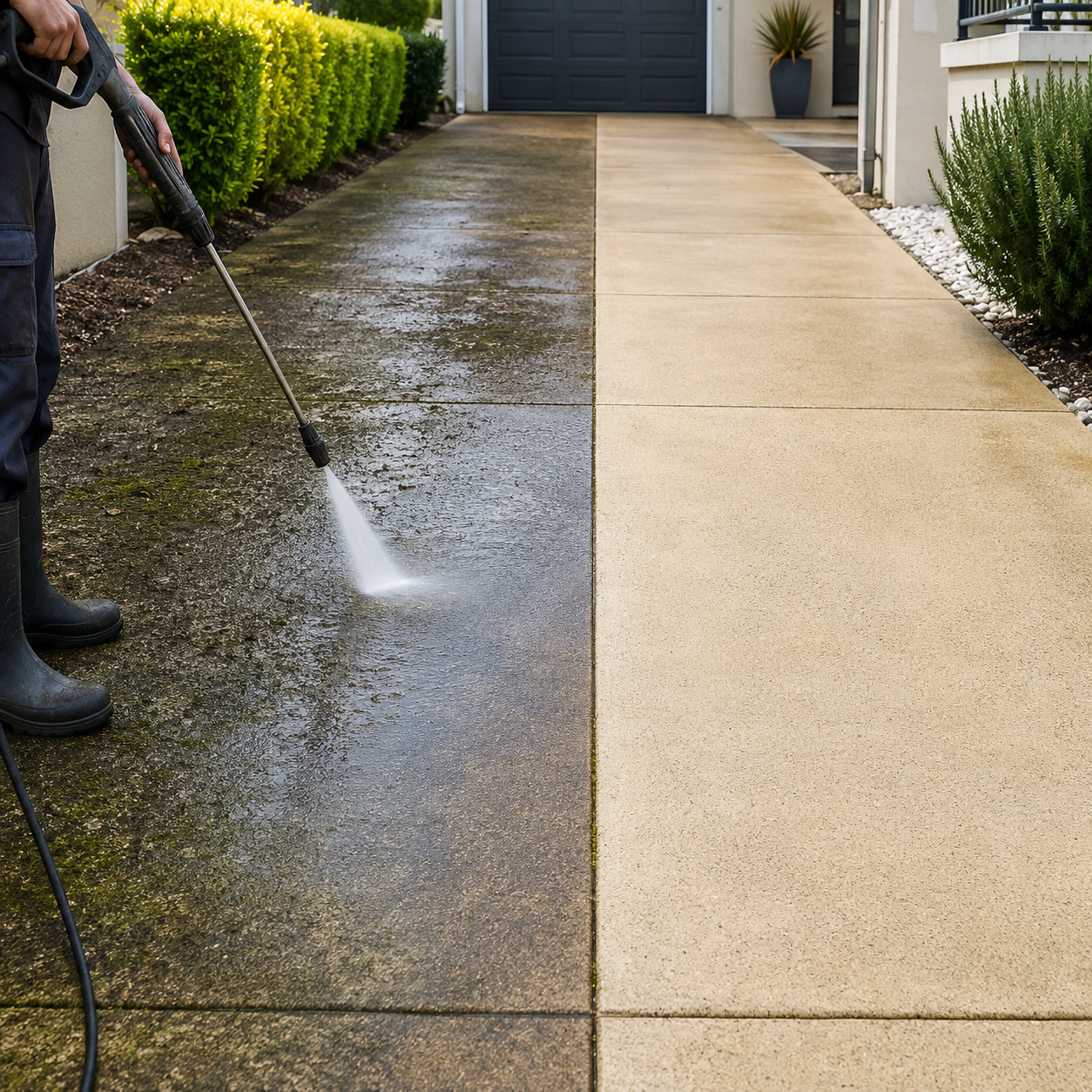
Because the change happens slowly, property owners often assume the surface itself has aged. Then pressure cleaning removes the buildup and reveals a dramatically brighter surface underneath.
This transformation is one of the reasons pressure cleaning creates such powerful before and after results. It restores the original appearance of materials that have been hidden beneath layers of grime for years.
🍂 Stains From Leaves and Organic Debris
Leaves may seem harmless, but when they sit on outdoor surfaces for long periods, they can leave stains behind. As leaves decompose, they release tannins and organic compounds that discolour concrete, pavers, decking, and pathways. These stains often appear as dark patches that remain visible even after the leaves themselves have been removed.
The same applies to fallen fruit, plant matter, and other organic debris commonly found around gardens. Pressure cleaning helps lift these stains from surfaces far more effectively than ordinary cleaning. This is particularly useful in outdoor spaces surrounded by trees where organic debris accumulates regularly.
🌧️ Slippery Surface Buildup
Many outdoor surfaces become slippery long before people realise there is a problem. The cause is often a combination of dirt, algae, moisture, mould, and environmental residue. These materials gradually form a thin layer that reduces traction, especially after rain.
The danger is that the surface may not look obviously hazardous. Residents, visitors, or employees may continue using it normally until someone slips or falls. Pressure cleaning removes these layers and restores grip to pathways, driveways, and other external surfaces.
This improves safety while also making the area look cleaner and more maintained. For shared properties and commercial spaces, this preventative maintenance can be particularly valuable.
🏢 Why Pressure Cleaning Makes Properties Look Newer
One of the biggest reasons pressure cleaning is so effective is because it restores visual contrast.
Over time, dirt and organic buildup create a dull appearance that affects everything around it. Surfaces lose brightness. Colours become muted. The entire property begins feeling older. After pressure cleaning, materials often appear dramatically different. Pavers regain colour. Concrete becomes brighter. Walls look cleaner. Outdoor spaces feel fresher and more inviting.
This visual improvement affects how people perceive the entire property. Even without major renovations, a pressure cleaned space often feels significantly newer and better maintained.
⚠️ Why Regular Cleaning Is Still Important
Pressure cleaning is powerful, but it does not replace regular maintenance. Sweeping, debris removal, and routine cleaning still play an essential role in preventing buildup from returning too quickly. Pressure cleaning works best as part of a broader maintenance strategy that keeps outdoor areas consistently clean.
Regular cleaning manages day to day dirt. Pressure cleaning removes the deeper contamination that accumulates over longer periods. Together, they create the best results.
Final Thoughts
Many outdoor surfaces look older, dirtier, and more worn than they actually are because of years of hidden buildup.
Mould, algae, grease, organic stains, embedded dirt, and slippery residue often cannot be fully removed through regular cleaning alone. Over time, these contaminants affect how safe, clean, and maintained a property feels.
High pressure cleaning goes beyond surface level cleaning by removing the buildup that ordinary methods leave behind. The result is cleaner, brighter, and safer outdoor spaces that instantly improve the appearance of a property.
Whether it is a driveway, pathway, wall, bin area, or shared outdoor space, pressure cleaning can reveal a level of cleanliness many people forgot was possible.
👉 Curious how much it would cost to restore your outdoor surfaces? Click here to get a free quote and discover how professional high pressure cleaning can transform your property.