
🧼 The Cleaning Tasks Most People Forget About (That Make the Biggest Difference)
“The cleanest properties are not defined by the biggest cleaning jobs. They are defined by the small details that never get overlooked.”
Have you ever walked into a building that looked clean but somehow still felt neglected?
It is an odd feeling because nothing appears to be obviously wrong. The floors have been cleaned, the bins have been emptied, and the gardens look maintained. At first glance, everything seems to be in order. Yet something about the property gives the impression that it is not being looked after properly.
🧼 The Cleaning Tasks Most People Forget About (That Make the Biggest Difference)
What many people do not realise is that our brains notice small details long before we consciously identify them. Tiny areas that are often overlooked during routine maintenance quietly influence how we perceive an entire property. A dusty handrail, cobwebs in a corner, stained entrance glass, or dirt collecting around a doorway may seem insignificant on their own, but together they create the feeling that maintenance is falling behind.
This is especially important for strata buildings, commercial properties, and shared spaces where dozens or even hundreds of people pass through every day. Residents, employees, visitors, and clients may never stop to comment on these details individually, but they certainly notice the overall impression they create. A property that feels consistently clean builds confidence, while one that feels slightly neglected often attracts more complaints, even if the major cleaning tasks are being completed on schedule.
The challenge is that most cleaning routines naturally focus on the obvious. Floors are vacuumed, rubbish is removed, bathrooms are cleaned, and common areas are tidied. These tasks are essential, but they are only part of what makes a property feel truly well maintained. The difference between an average-looking building and one that immediately feels professional often comes down to the areas that people forget to clean.
The good news is that these overlooked details are usually simple to maintain once they become part of a consistent routine. Rather than requiring expensive renovations or additional resources, they simply require attention and awareness. Understanding where dirt quietly accumulates helps property managers, business owners, and residents create spaces that always leave a positive impression.
🚪 Entrance Doors and Glass Panels Set the Tone
Every visit to a property begins at the entrance. Whether someone is arriving home after work, visiting a business, or attending a meeting, the entrance creates the very first impression before they have even stepped inside. It is one of the most important areas of any property, yet it is also one of the easiest places to overlook during routine cleaning.
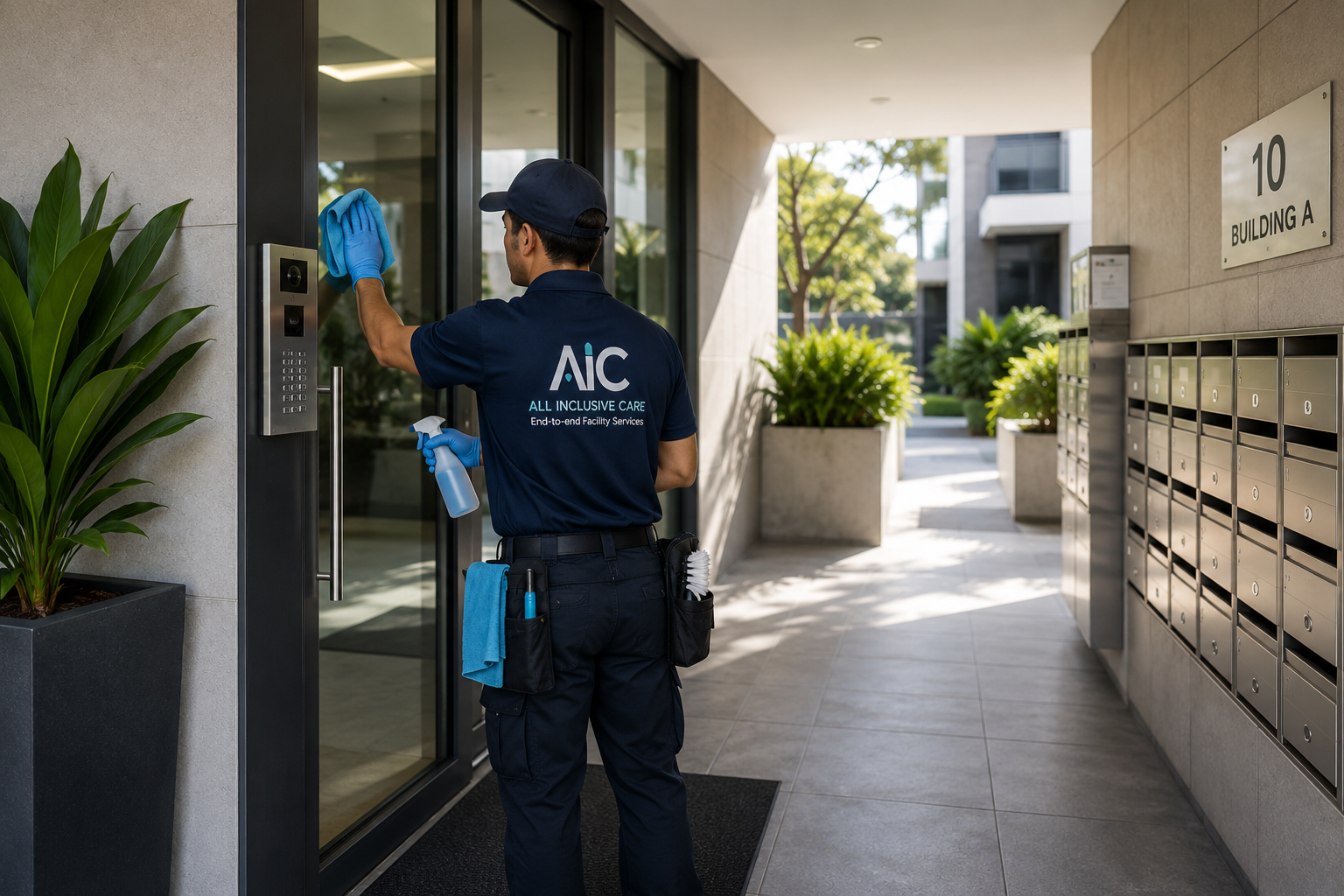
Glass entrance doors are a perfect example. Throughout the day they collect fingerprints, dust, water marks, and residue from constant use. Because these marks appear gradually, they often go unnoticed by the people who work or live in the building every day. Visitors, however, see them immediately. Cloudy glass can make an otherwise modern property feel older and less inviting, even if the rest of the building is spotless.
Door frames deserve just as much attention. Dust settles on ledges, insects gather in corners, and dirt builds up around handles and hinges. These areas are touched constantly but are not always included in standard cleaning routines. Over time, small amounts of dirt become noticeable enough to affect the overall presentation of the entrance.
Another commonly forgotten detail is the area directly outside the entrance. Leaves, cigarette butts, dust, and small pieces of litter often collect near automatic doors, entry mats, or pathways leading into the building. These small pieces of debris may seem harmless, but they immediately influence how clean the entire property feels.
When entrances are consistently maintained, people notice the difference without necessarily realising why. The building feels welcoming, organised, and cared for from the very first step. That positive first impression often carries through the rest of their experience.
🕸️ Corners, Ceilings, and High Areas Are Easy to Ignore
One of the biggest differences between a property that looks professionally maintained and one that simply looks "clean enough" is the condition of areas above eye level.
People naturally focus on what is directly in front of them. Floors, furniture, and frequently used surfaces receive regular attention because they are impossible to ignore. Ceilings, high corners, light fittings, and roof edges, however, often escape notice until dirt has accumulated for weeks or even months.
Cobwebs are one of the clearest examples. A single cobweb hanging near an entrance or stairwell may seem like a small issue, but it immediately signals that an area has not been inspected recently. It is remarkable how something so small can change the perception of an entire space.
Dust also accumulates in places people rarely think to check. Ceiling vents, exposed pipes, security cameras, signage, and the tops of light fixtures quietly collect dust over time. Because these surfaces are not handled regularly, the buildup often becomes substantial before anyone notices.
Outdoor covered areas present similar challenges. Car parks, loading zones, bin enclosures, and walkways protected from rain often accumulate dust, leaves, spider webs, and insect nests. Rain cannot wash these areas naturally, which means manual cleaning becomes even more important.
Regular visual inspections of high areas help prevent these issues from becoming obvious. Cleaning above eye level may not seem like a priority, but it is often one of the details that separates exceptional property maintenance from average maintenance.
✋ Handrails, Lift Buttons, and Other High-Touch Surfaces
Some of the most frequently used parts of a building are also among the most forgotten during routine cleaning.
Handrails, lift buttons, door handles, intercom panels, mailboxes, gates, and access control systems are touched hundreds of times every week. Every person who enters the building interacts with these surfaces, making them some of the busiest areas in any shared property.
Because they are relatively small, they are often cleaned quickly or overlooked entirely. Yet these are precisely the places where fingerprints, grease, dust, and everyday wear become most visible. A polished floor loses much of its impact if the handrail beside it is covered in marks and grime.
These surfaces also influence how people perceive hygiene. Even when visitors are not consciously inspecting them, they notice whether handles feel clean, whether lift buttons appear maintained, and whether shared touchpoints are free from visible dirt. These subconscious observations contribute to the overall feeling of trust people have in the property.
Regular attention to high-touch surfaces does not require significant extra time, but it has a noticeable impact on presentation. Wiping down these areas consistently helps maintain a fresh appearance while also supporting better hygiene throughout the building.
Professional cleaning is rarely defined by dramatic transformations. More often, it is the result of small details being maintained consistently, and high-touch surfaces are one of the best examples of that principle.
🌧️ Outdoor Areas Around the Building Need More Attention Than You Think
When people think about cleaning, they often picture what happens inside a building. Floors are vacuumed, bathrooms are sanitised, kitchens are wiped down, and rubbish is removed. While these tasks are essential, outdoor areas are exposed to completely different conditions and require their own maintenance strategy.
Unlike indoor spaces, external areas are constantly affected by wind, rain, dust, pollen, leaves, pollution, bird droppings, and changing weather conditions. Even after a thorough clean, new debris begins accumulating almost immediately. This gradual buildup often goes unnoticed because it happens little by little every day.
Pathways are a good example. They may appear relatively clean from a distance, but closer inspection often reveals dirt collecting along edges, leaves trapped in corners, weeds emerging between pavers, or stains beginning to develop on the surface. None of these issues appear overnight, but together they slowly change the way the property is perceived.
Another commonly forgotten area is around external seating, garden beds, and building entrances. Dirt naturally gathers where hard surfaces meet landscaped areas. Small branches, mulch, soil, and leaves are constantly moved by wind or foot traffic, creating an untidy appearance that can make even a well-maintained property feel neglected.
Regular outdoor inspections are just as important as indoor cleaning. Addressing these small issues before they become obvious helps maintain the presentation of the entire property and prevents minor maintenance concerns from turning into larger cleaning projects later.
📬 Signage, Mailboxes, and Building Fixtures Quietly Influence First Impressions
One of the easiest things to overlook is the collection of permanent fixtures that people interact with every day.
Mailboxes, directional signs, noticeboards, intercoms, fire hose cabinets, building directories, and external lighting all become part of the visual identity of a property. They rarely attract attention when they are clean, but they stand out immediately when they are dirty.
Dust collects on flat surfaces. Water stains develop after rain. Spider webs appear around corners. Fingerprints build up on intercom panels, and faded grime slowly accumulates around edges and screws. These details seem insignificant individually, yet together they communicate whether a building receives consistent attention.
Mailboxes deserve particular attention because residents interact with them almost every day. Scratches, dust, fingerprints, and accumulated dirt can make a building feel older than it actually is. The same applies to building directories and signage. Clean, well-maintained signs reinforce professionalism, while dirty or neglected ones subtly suggest that maintenance is inconsistent.
Lighting fixtures also deserve regular inspection. Exterior lights often collect insects, cobwebs, and dust, reducing both their appearance and effectiveness. Keeping these fixtures clean improves not only presentation but also visibility and safety during the evening.
These fixtures may never become the subject of a complaint on their own, but they quietly contribute to the overall experience of everyone who enters the property.
🗑️ The Space Around the Bins Is Just as Important as the Bins Themselves
Waste management is often judged by whether the bins have been emptied. While regular collection is obviously essential, many properties overlook what happens around the bins themselves.
Even when bins are emptied on schedule, the surrounding area can quickly become untidy. Loose cardboard, small pieces of rubbish, leaked liquids, broken bags, leaves, and dust naturally accumulate around waste areas throughout the week. If these spaces are not cleaned regularly, they begin creating the impression that the entire waste management system is failing.
The area immediately surrounding the bins is also where residents form their opinions. People rarely inspect the inside of a bin, but they always notice whether the surrounding floor is clean, whether cardboard has been left outside, or whether unpleasant smells linger after collection day.
Another common issue is residue left behind after bins are emptied. Small spills and stains may remain on concrete surfaces, gradually becoming darker and more noticeable over time. These marks not only affect appearance but can also contribute to lingering odours and attract pests if they are not addressed.
Maintaining the area around waste bins demonstrates a proactive approach to property care. It shows that maintenance is focused not only on completing scheduled tasks but also on preserving the overall cleanliness and presentation of shared spaces.
👀 Regular Inspections Often Matter More Than Bigger Cleaning Jobs
One of the biggest differences between properties that always look well maintained and those that constantly feel like they are catching up is not necessarily the amount of cleaning being done.
It is the frequency of inspections. Many maintenance issues develop gradually. Dust collects slowly. Cobwebs appear one strand at a time. Leaves gather after windy days. Water stains become darker after each rainfall. Because these changes happen progressively, they are easy to miss during busy routines.
Regular inspections allow these small problems to be identified before they become noticeable to residents and visitors. Instead of waiting for complaints or obvious deterioration, proactive maintenance addresses issues while they are still quick and inexpensive to resolve.
This approach also creates greater consistency. Rather than alternating between periods where the property looks immaculate and periods where it appears neglected, regular inspections help maintain the same high standard every week.
For strata managers, business owners, and property managers, this consistency is often what builds trust. Residents may not consciously notice every small detail, but they certainly notice when those details are consistently looked after.
Ultimately, the goal of professional cleaning is not simply to remove dirt. It is to create an environment where people rarely have a reason to think about cleanliness at all because everything quietly feels organised, cared for, and under control.
Final Thoughts
The difference between an average-looking property and one that feels professionally maintained is rarely created by one major cleaning task. More often, it is the result of dozens of small details receiving consistent attention over time.
Clean entrances, spotless glass, tidy pathways, dust-free fixtures, maintained handrails, organised waste areas, and regularly inspected outdoor spaces all work together to shape how people experience a property. Individually, these details may seem minor. Together, they create the feeling that a building is managed with care and professionalism.
In Sydney, where outdoor conditions constantly expose properties to dust, leaves, moisture, and daily wear, these overlooked areas can quickly begin affecting first impressions if they are ignored. Staying ahead of the small details not only improves appearance but also reduces complaints, supports better hygiene, and helps protect the long-term value of the property.
Professional cleaning is not about doing more work. It is about paying attention to the areas that make the biggest difference.
👉 Curious how much it would cost to keep every corner of your property consistently clean and well maintained? Click here and get a free quote and discover how a proactive cleaning routine can transform the way your property looks and feels.