Why Some Outdoor Areas Age Faster Than Others
Outdoor Aging, Pathway Maintenance
Outdoor areas are constantly exposed to conditions that slowly change how they look. Sunlight fades surfaces, rain leaves behind moisture, dirt settles into porous materials, and plants continue growing every day. These changes happen gradually, making them almost invisible to the people who see the property regularly. Months later, however, the cumulative effect becomes impossible to ignore.
Why Some Outdoor Areas Age Faster Than Others
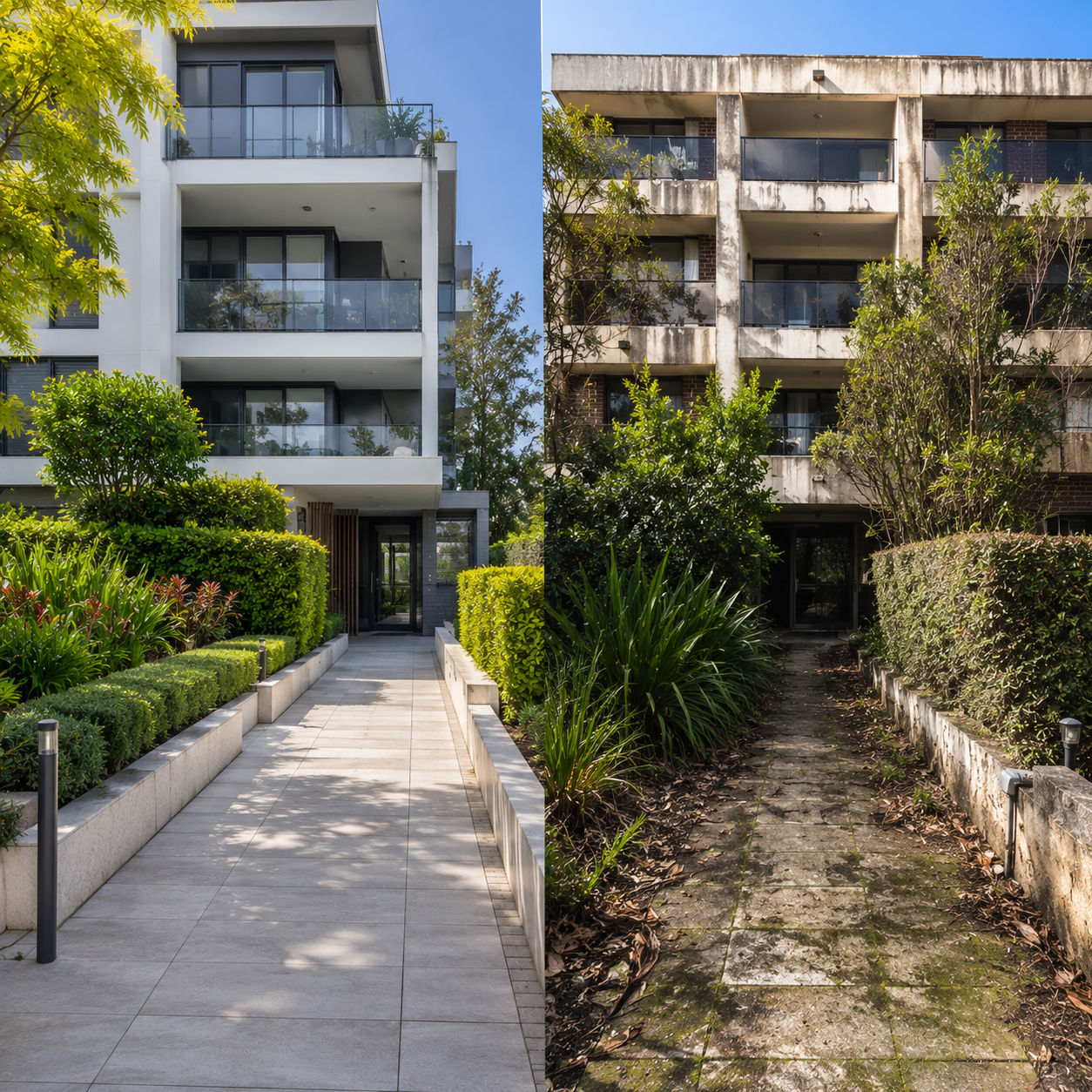
Outdoor Aging follows patterns. Surfaces respond to light, water, growth and use. Pathways, driveways, gardens and shared common areas all tell a quiet story about how they are treated and where they sit in the landscape. Some changes are gentle and attractive. Others feel harsh and premature. The difference usually lies in a few simple forces: sun exposure, moisture, mould, algae, foot traffic and maintenance.
Sun Exposure: Fading, Drying and Cracking
The sun is often the quiet architect of Outdoor Aging. Areas that sit in full sun for most of the day will usually age faster in appearance than shaded corners. UV light breaks down pigments in paving, stains on timber and even the binders in tarmac. This leads to fading, chalky surfaces and a washed-out look on exposed pathways and driveways long before shaded sections show similar change.
Heat also dries out materials. Timber decking in sunny gardens can warp or crack, while concrete in exposed common areas may develop fine surface crazing. In contrast, the same materials under a tree canopy or beside a building wall often keep their colour and finish for longer. When planning Pathway Maintenance, it helps to think in zones: high-sun areas will need more frequent sealing, staining or replacement than shaded ones, even if they were installed on the same day.
Moisture: The Constant Companion of Wear
While sun dries, moisture softens and stains. Outdoor surfaces that hold water, or stay damp for long periods, age in a different way. Puddles on a driveway, a low spot on a garden path, or a shaded corner where morning dew lingers all become small laboratories for faster deterioration. Water seeps into cracks, freezes in winter, and expands. Over time this widens joints, lifts pavers and breaks down the surface layer of concrete and tarmac.
Moisture also carries dirt. On pathways and in common areas where drainage is poor, fine soil particles settle on the surface and in gaps. This makes the area look dull and patchy and provides the perfect base for organic growth. A path that dries quickly after rain will often stay visually fresher for years, while a similar path in a damp, enclosed courtyard may feel old and tired in a single season.
Mould: Subtle Staining, Strong Signals
Mould thrives where moisture and shade meet. It often appears first as faint darkening in the corners of gardens, along the edges of pathways or on walls that receive little direct sun. Over time, it forms more visible patches and streaks, especially on render, painted surfaces and porous stone. Even when it does not damage the structure directly, mould can dramatically change how old an area looks.
On driveways and in communal walkways, mould growth suggests neglect, even if the surface beneath is sound. It can also make surfaces slightly slippery. Regular, gentle cleaning and good air flow reduce its hold. In terms of Outdoor Aging, mould is often more of a visual problem than a structural one, but appearance matters. A clean, pale path feels newer and more welcoming than one marked by dark, uneven staining.
Algae: Green Films and Slippery Surfaces
Algae is another sign of damp, still conditions. It often appears as a green sheen on stone steps, shaded brick pathways or the north-facing side of driveways. Visually, it softens edges and dulls colours. Practically, it creates slip hazards, especially in shared common areas and on heavily used paths. An outdoor space covered in algae rarely feels cared for, even if the underlying materials are relatively new.
The presence of algae also accelerates Outdoor Aging. It holds moisture against the surface, keeping it damp for longer after rain. This can lead to more frequent freeze–thaw cycles in colder months and a steady softening of the top layer of stone, concrete or grout. Regular Pathway Maintenance that includes light cleaning and, where appropriate, the use of suitable treatments helps keep algae in check and preserves both appearance and lifespan.
Moisture, shade and neglect quickly turn fresh pathways into tired, uneven surfaces.
Foot Traffic: Wear, Compaction and Patterns of Use
Not all areas are used in the same way. A front pathway that sees daily school runs, deliveries and visitors will age differently from a quiet side path leading to a bin store. Heavy foot traffic compresses soil and bedding layers, polishes the surface of stone and concrete, and loosens joints over time. On driveways, the repeated weight of vehicles creates ruts and hairline cracks, especially where the base layer is thin or poorly compacted.
In gardens, desire lines tell the same story. Grass wears away along the shortest route between gate and shed, leaving bare soil or compacted earth. Paving slabs at the entrance to a patio fade and stain faster than those in the far corner. In shared common areas such as communal courtyards or block entrances, the main route to the door will always show more wear than the edges. Recognising these patterns makes Pathway Maintenance more targeted: reinforce high-traffic zones, accept gentle wear in quieter corners, and choose more durable materials where use is heaviest.
Inconsistent Maintenance: The Hidden Accelerator
Maintenance does not need to be complex, but it does need to be consistent. Outdoor areas that receive occasional intense cleaning and then long periods of neglect often age faster than those that are tended in small, regular ways. Harsh pressure washing once every few years may strip the surface of paving, remove grout and open up tiny voids where water collects. Light sweeping, spot cleaning and gentle washing, done more often, usually leads to a calmer, more even pattern of Outdoor Aging.
Inconsistent maintenance also creates contrast. A freshly cleaned front path can make the driveway beside it look older overnight. A newly mulched garden bed can highlight the tired state of the adjacent common walkway. When planning care, it helps to think in zones and seasons rather than in isolated tasks. Small, repeated actions across pathways, driveways, gardens and shared areas keep everything ageing at a similar, more graceful pace.
📌 Key Takeaway: Gentle, regular care usually extends lifespan more than rare, aggressive cleaning.
Pathways, Driveways, Gardens and Common Areas: Different Roles, Different Rhythms
Each type of outdoor space ages in its own rhythm. Pathways are narrow, functional and often framed by planting or walls. They show Outdoor Aging through staining, joint movement and surface wear. Driveways carry heavier loads and reveal age in cracks, sagging edges and oil marks. Gardens change constantly, with plants softening hard lines but also dropping leaves, petals and sap that stain paving and feed mould and algae growth.
Common areas, such as shared courtyards, entrances and communal paths, bring all of these factors together. They experience varied foot traffic, inconsistent cleaning and a mix of sun and shade. Because many people use them, small signs of neglect are noticed sooner. A patch of algae on communal steps, a cracked slab at a shared entrance or mould on a boundary wall all suggest that the space is ageing faster than it should, even if the materials still have years of structural life left.
Slowing Outdoor Aging with Simple Choices
You cannot stop Outdoor Aging, but you can guide it. A few simple choices make a noticeable difference to both appearance and lifespan:
Choose surfaces suited to their level of sun exposure, using UV-resistant finishes where light is strongest.
Improve drainage so moisture does not linger on pathways, driveways or in low garden spots.
Clean mould and algae early, before they establish deep staining or slippery layers.
Strengthen high-traffic routes with more robust materials or thicker bases to resist wear.
Create a simple, regular Pathway Maintenance routine rather than relying on occasional deep cleans.
A Calmer View of Change Outdoors
Outdoor spaces will always change. Sun will fade, rain will stain, and surfaces will soften under years of footsteps. When you understand how sun exposure, moisture, mould, algae, foot traffic and inconsistent maintenance interact, the process feels less random and less frustrating. You can see why one path looks older than another, why a driveway weathers in certain patches, and why some corners of the garden seem to age faster than the rest.
With this understanding, Outdoor Aging becomes something you work with rather than fight against. You can choose where to accept gentle patina and where to protect a clean, simple finish. You can focus your Pathway Maintenance on the places that need it most and allow the rest of the space to age quietly, in its own time, in warm, natural tones that suit the life lived there.
Final Thoughts
Outdoor areas do not age at the same rate, even when buildings are built at the same time. Sunlight, moisture, pollution, landscaping, foot traffic, and maintenance routines all influence how quickly outdoor spaces begin to change. While these environmental factors cannot be eliminated, their impact can be managed through consistent, proactive care.
The properties that continue looking fresh year after year are rarely the ones that receive the most expensive upgrades. More often, they are the ones where small maintenance tasks are carried out consistently before visible deterioration has time to develop.
Understanding why outdoor areas age differently allows property owners, strata managers, and building managers to focus on prevention rather than constant restoration. The result is a cleaner, safer, and more attractive property that continues making a positive impression every day.
👉 Curious how much it would cost to keep your outdoor spaces looking their best all year round? Click here and get a free quote and discover how proactive gardening, external cleaning, and pressure cleaning can help protect the appearance of your property for years to come.