How to Stop Cardboard from Taking Over Your Recycling Area
Waste Management, Cardboard Recycling, Sustainable Living
How to Stop Cardboard from Taking Over Your Recycling Area
Cardboard feels like the “good guy” of household waste. It is recyclable, it looks harmless, and it usually comes with something we are excited to receive, like an online order. Yet, in many homes and apartment buildings, cardboard is behind overflowing recycling bins, blocked hallways, untidy waste rooms, delayed collections, and frustrated residents. Let us unpack why this happens and how a better understanding of cardboard can make waste management smoother for everyone.
Cardboard: The Surprisingly Tricky “Good” Waste
On paper, cardboard is a recycling hero. It is widely accepted in curbside programs, it can be turned into new products multiple times, and it is made from a renewable resource. So why does it cause so many day-to-day headaches in homes, apartment complexes, and condo buildings?
The answer lies in one simple truth: cardboard takes up a lot of space especially when it is not broken down. A single shipping box might not seem like a big deal, but multiply that by dozens of residents, daily deliveries, and weekend shopping sprees, and you suddenly have a mountain of bulky material competing for limited room in bins and waste rooms.
How Online Shopping Supercharged the Cardboard Problem
A big part of the story is the rise of online shopping. Groceries, clothing, electronics, pet food, even household cleaners many of the things we used to buy in-store now arrive on our doorsteps in cardboard boxes. And often, it is not just one box. Items may be double-boxed, padded with cardboard inserts, or shipped separately in their own packaging, even when ordered together.
This shift has quietly changed the waste profile of many households and residential buildings. Trash volumes might stay similar, but recycling especially cardboard has exploded. That means more material to manage in the same amount of space, often with no corresponding increase in bin capacity or collection frequency. The result? Cardboard becomes the main culprit behind many everyday waste frustrations.
Overflowing Recycling Bins: Why Cardboard Fills Them So Fast
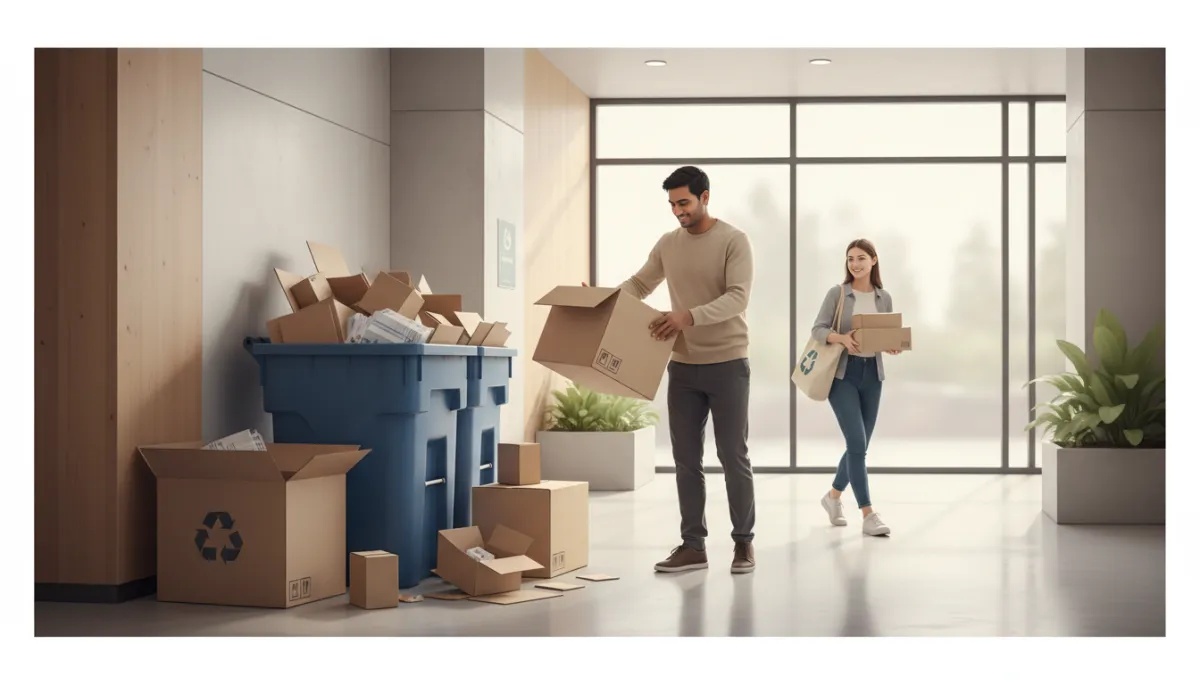
Overflowing recycling bins are one of the most visible signs of cardboard challenges. You open the recycling lid and see boxes sticking out, lids that will not close, and sometimes bags of recyclables piled on top or on the ground nearby. It can feel like the recycling program is failing, even when people are trying to do the right thing.
The main issue is volume versus weight. Cardboard is very light but very bulky. A bin can look completely full while still being well under its weight limit. Unflattened boxes act like balloons, trapping air and taking up space that could hold much more material if they were broken down. When even a few residents toss whole boxes into a bin, they quickly crowd out everyone else’s recyclables, leading to overflow long before the scheduled pickup day.
💡 Friendly Tip: Flattening a box can reduce its volume by up to 80%. A few extra seconds with a box cutter or by hand can make a huge difference to how long your recycling bin stays usable.
Blocked Access Areas: When Boxes Turn into Barriers
Another common complaint in shared buildings is that cardboard ends up blocking access areas. Maybe you have seen it: boxes stacked in front of recycling carts, leaning against doors, or spread across hallways leading to the waste room. This is more than just inconvenient it can be a safety issue, especially in narrow corridors or fire exit routes.
Why does this happen so often with cardboard? For one thing, boxes are awkward to carry when they are not flattened. Residents may drop them just inside the waste room or wherever there is a bit of floor space, planning to come back or assuming someone else will deal with them. In busy buildings, deliveries often come in waves weekends, holidays, or big sales events so cardboard builds up quickly and spreads into any available space, including access paths that should be kept clear.
Untidy Waste Rooms: How Cardboard Creates Visual and Practical Chaos
Many property managers say the number one source of complaints about waste rooms is not food waste or general trash it is cardboard. Untidy waste rooms often start with a few innocent habits: boxes left beside a full bin, not flattened, or stacked “just for now” in a corner. Over a few days, that corner turns into a cardboard wall, and the whole room looks messy and overwhelming.
Cardboard is also visually dominant. Large, printed boxes with logos and shipping labels stand out and make clutter feel worse, even if the actual amount of material is not huge. When waste rooms look chaotic, people are less likely to follow rules. They may start leaving other items on the floor, mixing trash with recycling, or giving up on sorting altogether because “it is all a mess anyway.” In this way, cardboard can quietly undermine the overall quality of recycling in a building.
Collection Delays: When Haulers Cannot Do Their Job Efficiently
You might not see what happens on collection day, but cardboard can cause headaches for haulers, too and that can lead to collection delays for your building or neighborhood. If bins are overflowing, lids will not close, or loose cardboard is piled on the ground, collection crews may need extra time to clean up and load everything. In some cases, they might not be allowed to take material that is outside the bin, or they may have to reschedule a pickup if access is blocked by large boxes or stacks of cardboard.
When trucks fall behind on their routes, pickups can be pushed later into the day or even to another day. That means bins stay full longer, overflow gets worse, and residents get more frustrated. In extreme cases, repeated access problems or contamination can even lead to service changes or extra fees for a building, which only adds to the tension between residents, managers, and waste providers.
Resident Complaints: When Cardboard Becomes a Community Frustration
All of these issues overflowing bins, blocked access, untidy rooms, and collection delays add up to one more big challenge: resident complaints. People understandably feel annoyed when they cannot reach the recycling cart, when the waste room smells or looks dirty, or when they feel like they are doing their part while others are not.
Cardboard often becomes the “face” of the problem because it is so visible. Residents may complain about neighbors who do not flatten boxes, about packages left in common areas, or about the building not providing enough space for recycling. These tensions can strain relationships between neighbors and between residents and property managers. Ironically, all this frustration is centered on a material that everyone agrees is “good” to recycle showing just how important it is to manage cardboard well.
💬 Friendly Reality Check: Most people are not trying to be difficult. They often just do not realize how much trouble one unflattened box can cause down the line.
Why Cardboard Creates These Challenges: The “Space and Behavior” Equation
To really understand cardboard’s impact, it helps to look at two key factors: space and behavior. Cardboard is a space-hungry material. It arrives in large, rigid shapes that do not naturally compress. Without action cutting, flattening, stacking it simply does not fit well in the containers and rooms we have designed for waste and recycling. That is the space side of the equation.
On the behavior side, managing cardboard well requires a few extra steps: opening boxes fully, removing tape when possible, flattening them, and placing them neatly in or beside designated containers. These steps are not hard, but they do take time and a bit of effort. When people are in a hurry, carrying groceries, or dealing with kids and pets, it is tempting to just drop a box near the bin and walk away. Multiply that small shortcut across many households, and you get the familiar pattern: overflowing bins, blocked areas, and messy rooms.
The rise of online shopping adds a third factor: frequency. Cardboard now arrives in a steady stream, not just after big purchases or holidays. That constant flow means small behavior gaps and limited space are exposed every single week. What used to be an occasional annoyance becomes a regular challenge unless habits and systems evolve to match the new reality.
Turning Insight into Action: Simple Ways Individuals Can Help
The good news is that once you understand why cardboard causes these issues, it becomes much easier to improve waste management practices both in your own home and in shared buildings. Here are some friendly, practical steps you can take that genuinely make a difference.
Flatten every box, every time. Make it a personal rule. Open all corners, press the box flat, and if it is large, cut or fold it so it fits neatly in the bin or designated area. This one habit directly reduces overflowing recycling bins and blocked access.
Stack cardboard neatly. If your building asks residents to place cardboard beside bins, stack it in a tidy pile against a wall, not in the middle of the floor or blocking doors. Think of it as leaving the space usable for the next person.
Time your drop-offs. If you know collection is tomorrow morning, consider waiting to bring down a big load of cardboard until the evening before. Spreading out when residents bring material can reduce peak-time overflow, especially in smaller buildings.
Buy smarter when you can. When it is practical, choose bundled shipments, avoid unnecessary gift boxing, or pick up items in-store if you are already going there. Each choice can mean fewer boxes arriving at your door.
Be a friendly role model. In shared buildings, people notice what others do. When you consistently flatten and stack boxes, you quietly set a standard that encourages neighbors to do the same.
💡 Small Habit, Big Impact: Keep a simple box cutter or pair of scissors near your front door or recycling area. Making flattening easy means you are far more likely to do it every time.
How Understanding Cardboard Helps Improve Building-Wide Practices
If you live in an apartment or condo, your individual actions matter but so do the systems your building has in place. A shared understanding of how cardboard behaves can inspire better building-wide practices that reduce complaints and make life easier for everyone involved in waste management.
Clear, friendly signage. Simple signs reminding residents to “Please flatten all cardboard” and showing a quick visual example can dramatically improve compliance. When people know what is expected, they are more likely to cooperate.
Dedicated cardboard zones. Some buildings create a specific spot just for cardboard, separate from other recyclables. When that area is well marked and kept tidy, it prevents boxes from spilling into access paths and keeps waste rooms more organized.
Right-sized service. Once managers understand how much cardboard online shopping generates, they can adjust bin sizes or collection frequency with their waste provider. Matching capacity to actual volume helps prevent chronic overflow and collection delays.
Occasional “cardboard blitz” days. After big shopping periods like holidays or major sales buildings can plan extra pickups or encourage residents to bring cardboard down on specific days. This targeted effort keeps waste rooms from becoming overwhelmed.
When residents and building managers share a basic understanding of why cardboard causes problems its bulk, the behavior it requires, and the impact of online shopping they can work together on solutions that feel fair, practical, and easy to follow. That shared understanding turns what used to be a source of conflict into an opportunity for cooperation.
Making Peace with Cardboard: A Friend, Not a Foe
At the end of the day, cardboard really is one of the “good” materials in our waste stream. It is recyclable, it supports a circular economy, and it is a big improvement over many plastic alternatives. The challenges it creates overflowing recycling bins, blocked access areas, untidy waste rooms, collection delays, and resident complaints are not signs that recycling is failing. They are simply signals that our habits and systems need to catch up with how we live now, especially in an age of constant online deliveries.
By understanding why cardboard behaves the way it does, you are already a step ahead. You can flatten and stack your own boxes more thoughtfully, encourage neighbors in a friendly way, and support better practices in your building or community. Those small actions add up to cleaner waste rooms, fewer complaints, and smoother collections while still making sure that all that cardboard gets a second life as something new.
Cardboard is not going away anytime soon, and neither is online shopping. But with a bit of awareness and a few simple habits, we can turn cardboard from a hidden headache into a quietly well-managed part of everyday life. The next time a package arrives at your door, you will know exactly how to keep that box from becoming part of the problem and instead, make it part of a cleaner, more efficient recycling story in your home and community.