🗑️ How to Prevent Bin Area Complaints Before They Start
🗑️ How to Prevent Bin Area Complaints Before They Start
Most bin area complaints don't begin on collection day. They begin weeks earlier.
A bin area rarely becomes a problem overnight.
Most complaints arrive after residents have spent days or even weeks noticing small issues that gradually become impossible to ignore. A recycling bin starts filling up more quickly than usual. A few cardboard boxes are left beside the bins after a busy weekend. Someone forgets to close a lid, rainwater collects inside a container, and unpleasant smells slowly begin to develop.
Individually, none of these situations seem urgent. In fact, they are the kind of small issues people walk past every day without giving them much thought. The problem is that they rarely happen in isolation. One overlooked detail leads to another until the entire waste area begins looking untidy, disorganised, or poorly maintained.
By the time the first email reaches the strata manager or building manager, the real issue has often been developing for much longer than anyone realised.
The good news is that most bin area complaints are highly predictable. They follow familiar patterns, and once you understand what those patterns look like, they become much easier to prevent. Rather than reacting after residents become frustrated, proactive maintenance allows problems to be addressed while they are still small, protecting both the appearance of the property and the experience of everyone who lives there.
👀 Small Changes Are Usually the First Warning Signs
One of the biggest misconceptions about waste management is that complaints begin when bins overflow.
In reality, residents usually start noticing problems much earlier than that. They might see a few loose pieces of cardboard beside the recycling bins, a small amount of rubbish left on the ground, or lids that are no longer closing properly. None of these issues seem significant on their own, but together they begin changing how the waste area feels.
People are naturally influenced by patterns. When they see the same small maintenance issues every few days, they begin assuming the situation is becoming normal. Even if bins are emptied on schedule, repeated signs of disorder slowly reduce confidence in how the property is being maintained.
This is why regular inspections are just as important as regular collections. Spotting these early warning signs allows building managers to resolve problems before they become visible enough for residents to start talking about them.
Preventing complaints often has very little to do with solving major issues. It has far more to do with recognising small changes before they become recurring problems.
📦 Overflow Is Often a Space Problem, Not a Waste Problem
Many people assume overflowing bins automatically mean too much rubbish is being produced.
Surprisingly, this is not always the case.
Recycling areas frequently become overcrowded because bulky materials occupy available space long before the bins actually reach capacity. Large cardboard boxes, packaging from online deliveries, and oversized items create the impression that recycling bins are full, even when a significant amount of usable space still remains inside.
Once residents believe the bins are full, they naturally begin leaving additional materials beside them. Within a short period, one or two boxes become a pile of cardboard, and that pile quickly changes how the entire waste area looks.
This is one of the reasons resident education plays such an important role. Encouraging people to flatten boxes before disposal may seem like a small request, but across an apartment building it can dramatically increase available space while reducing visual clutter.
Sometimes preventing complaints is not about increasing collections. It is simply about helping everyone use the available space more effectively.
🧼 Clean Surroundings Matter Just as Much as Empty Bins
Empty bins do not automatically create a clean waste area.
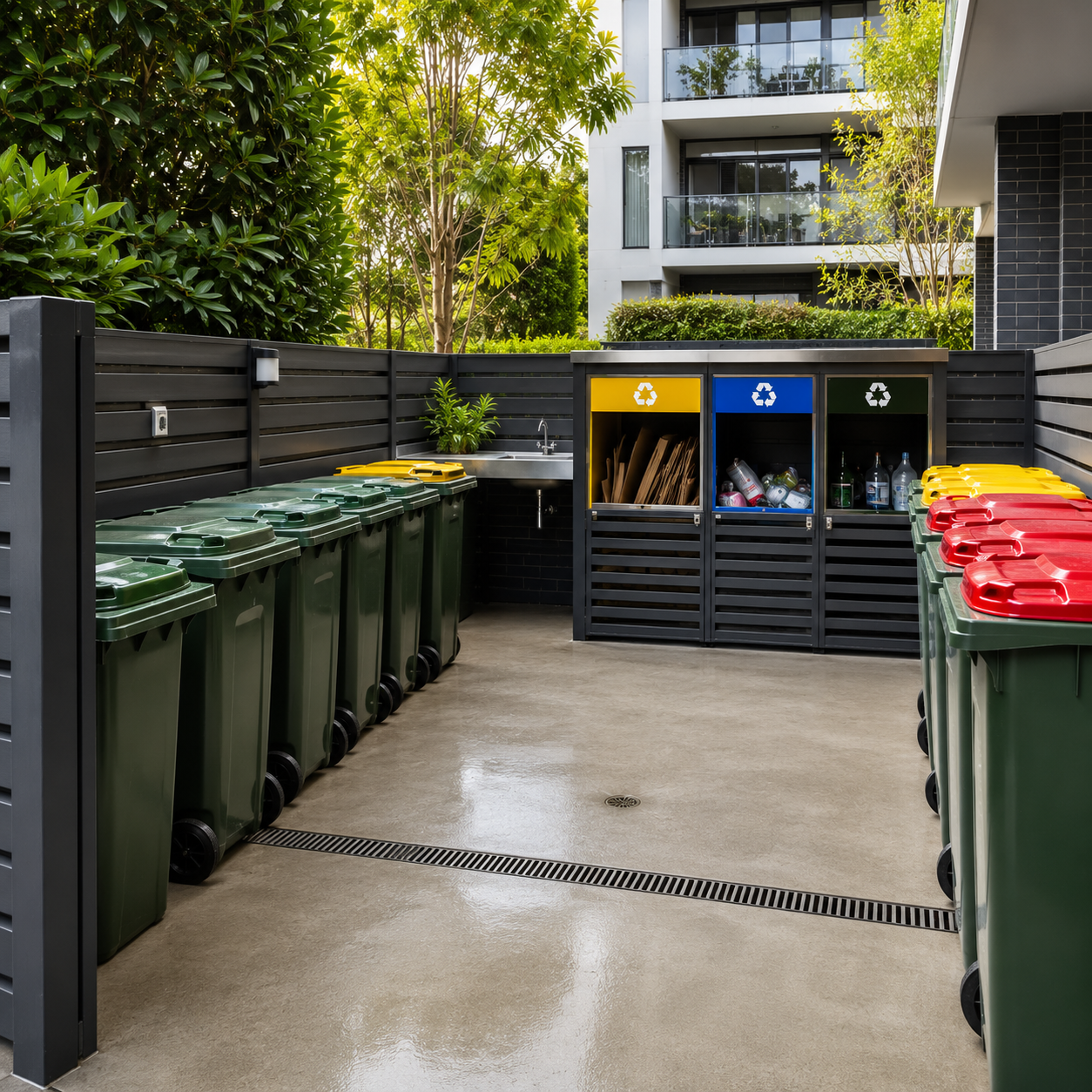
Residents rarely judge waste management by looking inside the bins. Instead, they judge it by everything surrounding them. Stained concrete, spilled liquids, scattered rubbish, unpleasant smells, dirty bin lids, and clutter around the enclosure all contribute to the overall impression of the space.
Even when collection schedules are working perfectly, neglected surroundings create the feeling that maintenance has been overlooked. Because waste areas are shared spaces used by everyone, they often become one of the strongest indicators of how well the entire property is managed.
Keeping the surrounding area clean also helps prevent secondary issues. Dirt, organic residue, and spilled waste attract pests, create lingering odours, and make future cleaning more difficult. Addressing these small issues consistently is far easier than restoring a heavily neglected waste area later.
A clean bin area is not simply about removing rubbish. It is about maintaining an environment that residents feel comfortable using every day.
📅 Consistency Prevents More Complaints Than Big Clean-Ups
Many buildings fall into the same cycle.
The waste area receives extra attention after a complaint has already been made. Everything is cleaned thoroughly, the bins are organised, and the space looks excellent again. For a while, the problem appears solved. Then daily use gradually returns the area to its previous condition until another complaint triggers another large clean-up.
Although this approach may seem practical, it is actually reactive rather than preventative.
Consistent maintenance produces much better long-term results. Small inspections carried out throughout the week allow issues to be corrected while they are still minor. Loose cardboard can be removed before it becomes a pile. Small spills can be cleaned before stains develop. Bin lids can be repositioned before odours begin escaping.
Residents often judge management based on consistency rather than perfection. They do not expect bin areas to look flawless every hour of every day. What they do appreciate is seeing that shared spaces are cared for regularly instead of only after problems become obvious.
That consistency quietly builds trust and significantly reduces the likelihood of complaints.
💬 Communication Is Part of Waste Management Too
One aspect of waste management that is often overlooked has nothing to do with cleaning at all.
It is communication.
Many recycling problems occur simply because residents are unsure how certain materials should be disposed of. Oversized cardboard, furniture, electronic waste, renovation materials, and green waste are all common sources of confusion. When people do not know the correct procedure, they usually make the most convenient decision, even if it creates problems for everyone else.
Clear signage, occasional reminders, and simple communication from building management can prevent many of these situations before they occur. The goal is not to police residents but to make the correct choice the easiest one.
Communication also encourages shared responsibility. Residents are far more likely to respect common areas when they understand how their individual actions affect the experience of everyone living in the building.
A well-managed waste area depends not only on maintenance teams but also on cooperation from the people who use it every day.
🌟 Prevention Always Costs Less Than Complaints
Once complaints begin, the conversation usually shifts from prevention to damage control.
Managers spend time responding to emails, organising urgent cleaning, speaking with contractors, and reassuring frustrated residents. All of this requires significantly more effort than preventing the problem in the first place.
Preventative maintenance changes the focus completely. Instead of constantly reacting, it creates systems that reduce the likelihood of complaints before they ever reach someone's inbox.
Regular inspections, organised recycling areas, clean surroundings, proactive communication, and consistent maintenance all contribute to a waste area that quietly does its job without attracting attention.
Ironically, the best waste management systems are often the ones residents never think about. When everything is clean, organised, and functioning properly, people simply dispose of their rubbish and continue with their day.
That quiet reliability is the real goal.
🏡 Final Thoughts
Bin area complaints rarely appear without warning. They usually begin as small maintenance issues that gradually build into larger frustrations. Overflowing cardboard, cluttered surroundings, unpleasant odours, inconsistent inspections, and poor communication all contribute to a resident's perception of how well a property is managed.
The encouraging news is that almost all of these issues are preventable. By focusing on consistency rather than reacting only after complaints arise, property managers can create cleaner, safer, and more organised waste areas that residents appreciate every day.
Ultimately, effective waste management is about much more than emptying bins. It is about protecting the experience of everyone who calls the property home.
👉 Want to reduce bin area complaints before they become a problem? Click here and get a free quote and discover how proactive bin management helps keep your property cleaner, more organised, and complaint-free.