🌿 How Often Should Hedges Be Trimmed in Sydney Gardens?
“Regular hedge trimming is one of the simplest ways to keep a garden looking structured, healthy, and professionally maintained.”
Have you ever stepped outside, looked around your garden, and felt like something just wasn’t quite right? The lawn might be freshly mowed, the pathways clean, and the garden beds relatively tidy. Yet somehow the whole space still feels a little messy, almost like it needs attention even though you have already done the obvious maintenance. This situation happens more often than people realise, and surprisingly, the problem is rarely the lawn itself.
🌿 How Often Should Hedges Be Trimmed in Sydney Gardens?
In many gardens across Sydney, the real reason a yard starts looking untidy is much simpler. The hedges have quietly grown out of control. Because hedges grow gradually over time, their changes are easy to overlook from week to week. At first, a few branches stretch slightly beyond the shape they once had. Then the edges soften. Eventually the hedge that once looked clean and structured begins to feel bulky, uneven, and visually heavy within the landscape.
Sydney’s climate plays a major role in this. Warm temperatures, regular rainfall, and long daylight hours create ideal conditions for plant growth. While these conditions are great for lush gardens, they also mean hedges grow faster than many property owners expect. A hedge that looked perfectly shaped only a couple of months ago can quickly lose its form if it is not maintained regularly.
For homeowners, property managers, and strata committees, this raises a common question. How often should hedges actually be trimmed to keep gardens looking tidy without overdoing it? Some people assume trimming once or twice a year is enough. Others trim randomly whenever the hedge starts looking too big. The truth is that hedge maintenance works best when it follows a consistent rhythm that matches the plant’s natural growth cycle.
Understanding how often hedges should be trimmed is not just about keeping them neat. Regular trimming keeps plants healthier, prevents them from taking over walkways or entrances, and helps gardens maintain the clean structure that makes outdoor spaces feel calm and welcoming. When hedges are maintained properly, they quietly support the entire visual balance of the garden.
🌿 Why Hedges Shape the Entire Look of a Garden
Most people naturally focus on lawns when thinking about garden maintenance. A neatly cut lawn is often the first sign that a garden is being looked after. However, experienced landscapers know that hedges actually have an even greater impact on how tidy or messy a space appears. Hedges function like the architectural lines of a garden, creating structure and guiding how the eye moves through the landscape.
When hedges are neatly trimmed, they create clear boundaries that frame the garden. They define walkways, separate spaces, and highlight other features like flower beds or trees. A well shaped hedge can make a garden feel organised and intentional, even if the rest of the landscaping is relatively simple. Clean hedge lines naturally create a sense of order that people notice immediately when they arrive at a property.
Once hedges begin to grow unevenly, that structure slowly disappears. Instead of sharp edges and balanced shapes, the hedge becomes soft and irregular. Branches extend outward in different directions and the once defined lines of the garden begin to blur. Even if the lawn is cut perfectly and the garden beds are maintained, overgrown hedges can still make the entire space feel slightly chaotic.
This effect is especially noticeable in strata properties and shared residential buildings. When residents or visitors approach a building, the landscaping often forms their first impression of the property. Overgrown hedges near entrances, parking areas, or pathways can make the whole building feel less maintained, even if the interior spaces are spotless. Because hedges frame these shared spaces, their condition influences how people perceive the care and management of the entire property.
☀️ How Sydney’s Climate Makes Hedges Grow Faster
Sydney’s weather is one of the reasons gardens here can look so vibrant throughout the year. The city enjoys a temperate climate with warm summers, mild winters, and regular rainfall. These conditions create the perfect environment for many hedge species to thrive. Plants receive plenty of sunlight, adequate moisture, and relatively stable temperatures, allowing them to grow consistently across multiple seasons.
Spring is often the time when hedge growth accelerates dramatically. As temperatures begin to rise after winter, plants enter a period of active growth. New shoots appear quickly, and hedges begin expanding in height and width almost week by week. If hedges are not trimmed during this stage, they can grow beyond their intended shape very quickly.
Summer continues this rapid growth cycle, especially for evergreen hedge varieties commonly used in Sydney landscaping. With longer days and plenty of sunlight, plants produce dense foliage and new branches. This is often when hedges become noticeably bulkier if they are not maintained regularly. The warmth encourages growth that can easily push hedges beyond pathways, fences, or garden boundaries.
Autumn brings slightly slower growth but does not stop it completely. Many hedges still produce new leaves and branches, although at a gentler pace. Winter tends to be the quietest period for hedge growth, but even during cooler months some species continue growing slowly. Because Sydney winters are mild compared to colder climates, hedges rarely go completely dormant.
These seasonal patterns explain why hedge trimming in Sydney usually needs to happen more frequently than in cooler regions where plant growth is limited for much of the year.
✂️ The Ideal Hedge Trimming Rhythm for Sydney Gardens
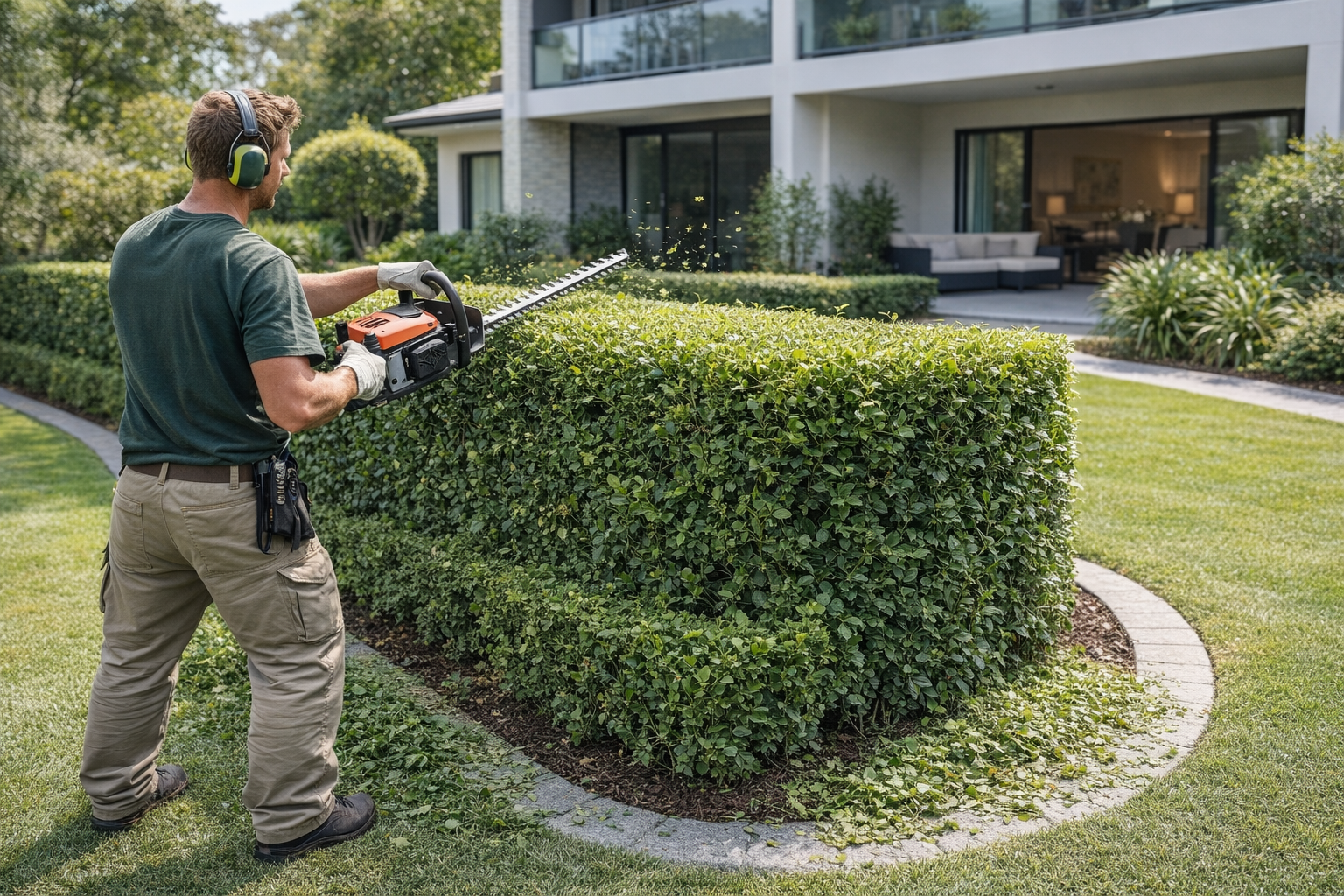
While every garden is different, most hedges in Sydney benefit from being trimmed several times throughout the year. A common approach is trimming hedges approximately every six to eight weeks during the main growing seasons. This schedule allows gardeners to maintain the hedge’s shape without removing excessive growth at once.
Spring trimming is particularly important because it sets the foundation for how the hedge will develop during the rest of the year. Early trims help guide new growth in the right direction and encourage the hedge to grow densely rather than unevenly. Regular shaping during this stage ensures the hedge maintains a balanced appearance as it expands.
During summer, maintenance trims become essential to keep growth under control. Even small trims during this period can prevent hedges from becoming oversized. Instead of waiting until the hedge looks dramatically overgrown, frequent light trims help maintain a consistent shape while encouraging healthy growth patterns.
Autumn trimming usually focuses on refining the hedge’s shape rather than controlling aggressive growth. By this time, gardeners often tidy the hedge to maintain clean edges before the slower winter season begins. This keeps the garden looking neat during the cooler months when outdoor maintenance tends to slow down.
Winter trimming is generally minimal, although occasional maintenance may still be necessary depending on the hedge species. Some gardeners take advantage of the slower growth period to perform light shaping that prepares the hedge for the next spring cycle.
🌱 Signs Your Hedges Need Attention
Even when following a general trimming schedule, gardens often provide clear visual clues that hedges need attention. One of the earliest signs appears when the clean edges of a hedge begin to fade. Instead of a crisp outline, the hedge starts developing irregular shapes as branches extend outward unevenly. This subtle change is often the first indication that trimming is overdue.
Another common sign is when hedges begin interfering with pathways, entrances, or driveways. Branches that extend into walking areas can make spaces feel narrow or cluttered. In some cases, they may even reduce visibility near corners or driveways, creating minor safety concerns.
Hedges can also begin casting heavier shade on nearby plants as they grow larger. While shade is not always harmful, excessive coverage can affect smaller plants that depend on sunlight. Leaves and small branches may also begin dropping more frequently as hedges grow denser, creating additional garden debris that needs cleaning.
Addressing these signs early prevents hedges from becoming difficult to manage later. Regular observation allows gardeners to maintain the hedge’s shape gradually rather than needing major cutting sessions to restore control.
🏢 Why Hedge Maintenance Matters for Strata Properties
In strata properties, landscaping serves more than just an aesthetic purpose. Gardens and shared outdoor spaces contribute significantly to how residents experience the building environment. Well maintained landscaping helps create a welcoming atmosphere that residents appreciate every time they return home.
Hedges play an important role in shaping these shared spaces. They often border walkways, define garden areas, and frame building entrances. When hedges are trimmed regularly, these spaces feel organised and thoughtfully maintained. Residents are more likely to feel proud of their property when the outdoor environment reflects consistent care.
When hedges become overgrown, the opposite effect can occur. Branches may block lighting fixtures, narrow walking paths, or create pockets where leaves and debris accumulate. Residents may begin raising concerns if landscaping appears neglected, especially in buildings where shared spaces are meant to be comfortable and accessible.
Consistent hedge trimming helps prevent these issues while maintaining the visual harmony of the property. For strata managers and committees, regular landscaping maintenance is one of the most effective ways to maintain a positive impression of the building.
🌳 The Long Term Benefits of Consistent Trimming
Beyond appearance, hedge trimming contributes to the overall health and longevity of plants. When hedges are trimmed regularly, they develop stronger and denser growth patterns. Removing excess branches encourages new shoots to grow evenly throughout the plant, resulting in fuller and more vibrant hedges.
Trimming also allows sunlight and airflow to reach deeper parts of the plant. This improves the overall health of the hedge and reduces the likelihood of pests or disease developing in dense areas where air circulation is limited. Healthier hedges maintain their shape more easily and require less drastic cutting over time.
Neglected hedges often become hollow or sparse in the middle because outer branches block sunlight from reaching inner sections. Once this happens, restoring the hedge’s fullness can take time and careful maintenance. Regular trimming prevents this issue by maintaining balanced growth throughout the plant.
Final Thoughts
Hedges may not always receive the same attention as lawns or flower beds, but they play a critical role in how gardens look and function. In Sydney’s climate, where plant growth can be rapid and continuous, regular hedge trimming is essential for maintaining clean and structured outdoor spaces.
Most gardens benefit from trimming hedges multiple times throughout the year, especially during the active growth periods of spring and summer. Staying consistent with trimming helps prevent hedges from becoming bulky or uneven while encouraging healthier plant growth.
For residential homes, commercial properties, and strata buildings alike, neatly maintained hedges contribute to an environment that feels organised, welcoming, and well cared for. A garden with properly shaped hedges often requires less effort to keep looking tidy because the structure of the space is already working in its favour.
Curious how much it would cost to keep your garden or strata landscaping consistently neat and under control? Get a free quote and discover how regular hedge trimming can make maintaining outdoor spaces easier and more predictable.