🧼 Can High Pressure Cleaning Damage Outdoor Surfaces?
“Pressure cleaning does not damage surfaces when the right technique is used. Problems usually happen when the wrong method is applied to the wrong material.”
If you have ever considered pressure cleaning your driveway, pathways, pavers, or outdoor areas, chances are you have asked yourself the same question many property owners ask before booking the service:
Can high pressure cleaning actually damage outdoor surfaces?
🧼 Can High Pressure Cleaning Damage Outdoor Surfaces?
It is a reasonable concern. After all, pressure cleaning equipment is designed to remove years of dirt, mould, algae, grease, and stains using powerful streams of water. When people see videos of pressure cleaners stripping away thick layers of grime in seconds, it is easy to wonder whether that same force could also damage the surface underneath.
This concern has become even more common as pressure cleaning equipment has become widely available. Today, homeowners can rent commercial-grade machines from hardware stores and attempt the work themselves. At first glance, the process seems simple. Point the machine at the surface, pull the trigger, and watch the dirt disappear.
The reality is much more complicated.
Just like any maintenance service, the results depend on how the equipment is used, the condition of the surface, and the experience of the person operating it. Pressure cleaning itself is not inherently damaging. In fact, when performed correctly, it is one of the most effective ways to restore outdoor areas and extend the life of many surfaces.
However, when the wrong pressure settings, techniques, or equipment are used, problems can occur. Understanding where those risks come from helps property owners make better decisions and avoid mistakes that can be costly to repair later.
💦 The Problem Is Usually Not the Equipment
One of the biggest misconceptions about pressure cleaning is that the machine itself causes damage.
In reality, pressure cleaning equipment is simply a tool. The same machine that safely restores a concrete driveway can also damage a timber deck if used incorrectly. The outcome depends entirely on how the equipment is adjusted and applied to the specific surface being cleaned.
Many people assume that more pressure automatically means better results. This is often where problems begin. Outdoor surfaces are made from different materials, and each material responds differently to water pressure. Concrete, brick, pavers, timber, rendered walls, painted surfaces, and natural stone all require different approaches.
Think about it the same way you would think about cleaning inside your home. You would not use the same cleaning product on glass, timber furniture, and carpet. The same principle applies outdoors. Different materials require different cleaning methods.
Professional pressure cleaning is not simply about blasting surfaces with water. It is about understanding the material, evaluating its condition, and choosing the safest method to achieve the desired result.
When people hear stories about pressure cleaning causing damage, the issue is usually not the machine itself. It is the fact that the wrong technique was used for the wrong surface.
🧱 Why Surface Condition Matters More Than Most People Realise
One of the most overlooked factors in pressure cleaning is the existing condition of the surface.
Many outdoor areas appear solid from a distance, but years of weather exposure can quietly weaken materials over time. Cracks, erosion, loose coatings, deteriorating grout, and hidden structural issues often develop gradually and remain unnoticed because they are covered by dirt and buildup.
When pressure cleaning removes those layers of grime, these imperfections suddenly become visible. This can create the impression that the cleaning process caused the damage, when in reality the issue was already there.
Concrete provides a good example. Healthy concrete is extremely durable and generally handles pressure cleaning very well. However, older concrete that has experienced years of wear may already have weak spots beneath the surface. Once the dirt is removed, those weaknesses become easier to see.
This is why professional cleaners often inspect surfaces before beginning work. Understanding the condition of the material helps determine the safest pressure levels and cleaning methods. It also allows property owners to identify maintenance issues that may need attention beyond cleaning.
In many cases, pressure cleaning does not create problems. It simply reveals them.
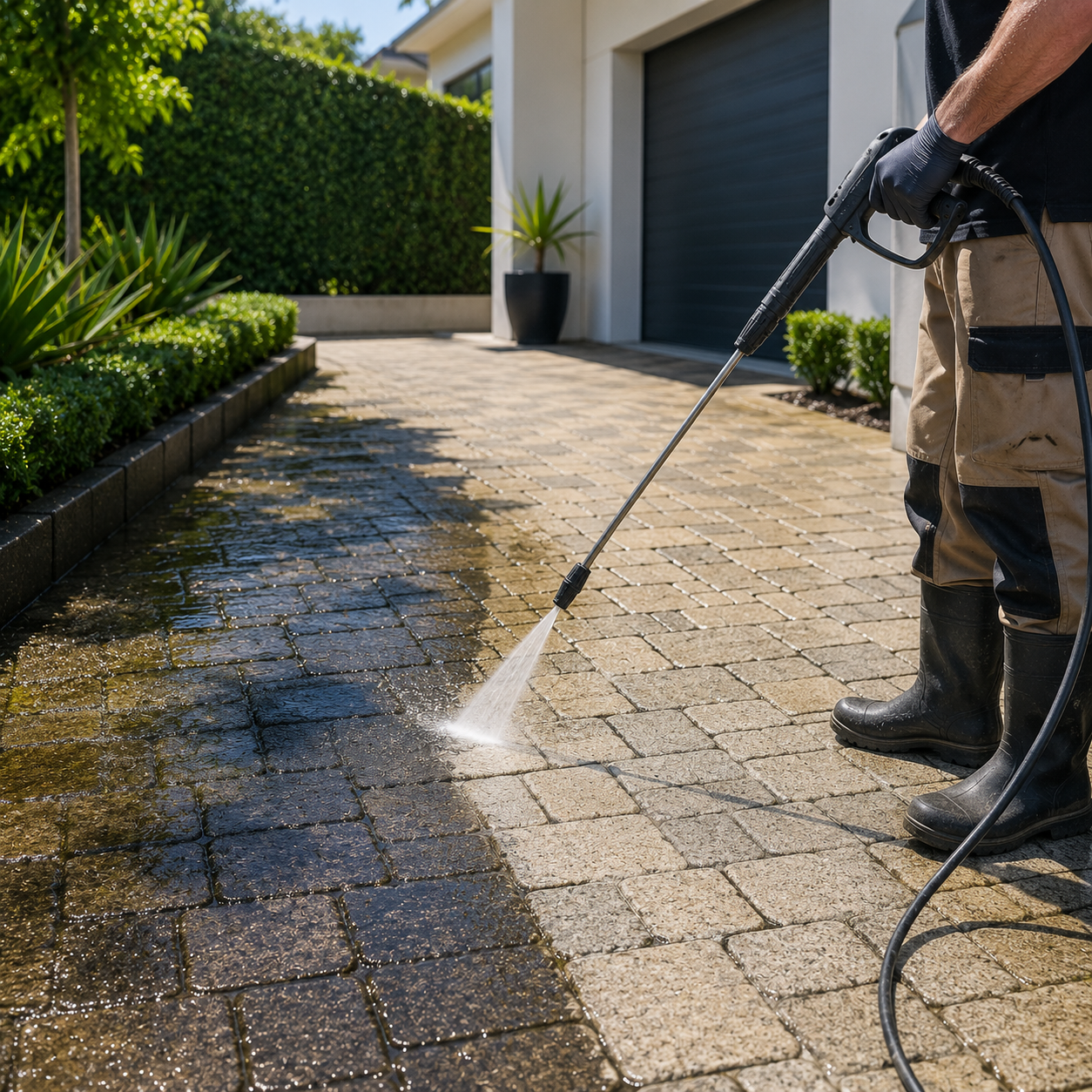
🪨 Pavers Require More Care Than People Think
Pavers are one of the most common surfaces people want pressure cleaned because they tend to collect dirt, mould, algae, and stains over time.
The transformation can be dramatic. Pavers that look old and discoloured often regain much of their original appearance once the buildup is removed. This is one of the reasons pressure cleaning is so popular for pathways, driveways, and outdoor entertaining areas.
However, pavers require more care than many people realise.
The biggest concern is not usually the pavers themselves. The greater risk involves the jointing material between them. Excessively aggressive cleaning can remove sand or other stabilising materials that help keep pavers in place. If enough material is removed, sections may eventually become less stable.
Professional cleaners understand this balance. The goal is to remove dirt and contaminants while preserving the structural integrity of the installation. In many cases, additional sand can be reapplied after cleaning if necessary.
When done correctly, pressure cleaning restores pavers without compromising their stability. The key is understanding that cleaning is about more than appearance. It also involves protecting the long-term condition of the surface.
🌳 Timber Is Where Mistakes Happen Most Often
Of all the outdoor surfaces commonly pressure cleaned, timber is usually the one most vulnerable to damage.
Unlike concrete or stone, timber is a softer natural material. While this gives it warmth and character, it also means it can react negatively to excessive pressure. Water streams that are perfectly safe for concrete can leave visible marks, splintering, or surface damage on timber decking and fencing.
This is particularly common when inexperienced operators use high-pressure settings without adjusting for the material. The immediate result may look clean, but closer inspection often reveals grooves, rough patches, or uneven surfaces that were not there before.
Another challenge is that timber often requires a combination of cleaning and preservation. Removing dirt is important, but so is protecting the wood from unnecessary wear. Professional cleaners frequently rely on lower pressure settings combined with specialised cleaning products to achieve this balance.
The goal is always restoration rather than aggression. A properly cleaned timber surface should look refreshed while maintaining its natural integrity and appearance.
🎨 Painted and Coated Surfaces Need Special Attention
Painted surfaces create another area where misunderstanding is common.
People are often surprised when pressure cleaning removes paint from walls, fences, or other structures. The immediate assumption is that the cleaning process caused the problem. However, the reality is often more complicated.
Healthy, well-adhered paint generally withstands appropriate pressure cleaning techniques without issue. Problems usually occur when the paint was already deteriorating before cleaning began. Cracks, peeling sections, moisture damage, and poor adhesion may have been developing for years beneath the surface.
Pressure cleaning simply exposes these weak areas.
In some situations, this is actually beneficial. Property owners preparing for repainting projects often use pressure cleaning specifically to remove loose paint and create a cleaner surface for new coatings.
The important distinction is that pressure cleaning should be adapted to the condition of the surface. Different nozzle types, pressure levels, and techniques can significantly reduce the risk of unnecessary damage while still achieving excellent cleaning results.
⚠️ DIY Pressure Cleaning Is Often Where Problems Begin
The increasing availability of rental equipment has led many people to attempt pressure cleaning projects themselves.
There is nothing inherently wrong with this approach. For smaller jobs and simple surfaces, DIY pressure cleaning can be effective. However, the challenge is that the equipment is often far more powerful than people expect.
Without proper knowledge, it is easy to use excessive pressure, hold the nozzle too close to the surface, or apply inconsistent cleaning patterns. Small mistakes can leave visible marks that are difficult to correct later.
Many homeowners focus entirely on removing dirt as quickly as possible. Professionals, on the other hand, focus on achieving the result safely. They understand how different materials respond, how to adjust equipment settings, and how to recognise signs that a surface requires a more cautious approach.
The difference is not simply the machine. It is the experience behind it.
This is why larger projects, sensitive surfaces, or heavily stained areas often benefit from professional assessment before cleaning begins.
🏡 The Real Purpose of High Pressure Cleaning
One of the most important things to understand is that pressure cleaning is not about using force for the sake of force.
The purpose of pressure cleaning is restoration.
Over time, outdoor surfaces accumulate layers of dirt, mould, algae, grease, pollution, and organic material that gradually change how a property looks and feels. These contaminants make surfaces appear older, darker, and less maintained than they actually are.
Pressure cleaning removes those layers and reveals the original surface underneath. The goal is not to damage the material. The goal is to help it look and perform the way it was intended to.
When approached correctly, pressure cleaning improves safety, enhances appearance, and extends the life of outdoor areas. It becomes a preventative maintenance tool rather than simply a cleaning service.
This is why professional pressure cleaning remains one of the most valuable investments property owners can make in maintaining external spaces.
Final Thoughts
So, can high pressure cleaning damage outdoor surfaces?
The honest answer is yes—but only when it is performed incorrectly or without consideration for the material being cleaned.
Pressure cleaning itself is not the problem. The real risk comes from using the wrong pressure levels, the wrong equipment, or the wrong technique for a specific surface. Concrete, pavers, timber, painted structures, and natural stone all have different requirements, which is why experience plays such an important role in achieving safe results.
When performed correctly, pressure cleaning is one of the most effective ways to restore outdoor areas, improve safety, and enhance the appearance of a property. Rather than causing damage, it helps reveal the true condition of surfaces and extends their lifespan through proper maintenance.
👉 Curious whether your outdoor surfaces are suitable for professional pressure cleaning? Click here to get a free quote and discover the safest way to restore your property's appearance.